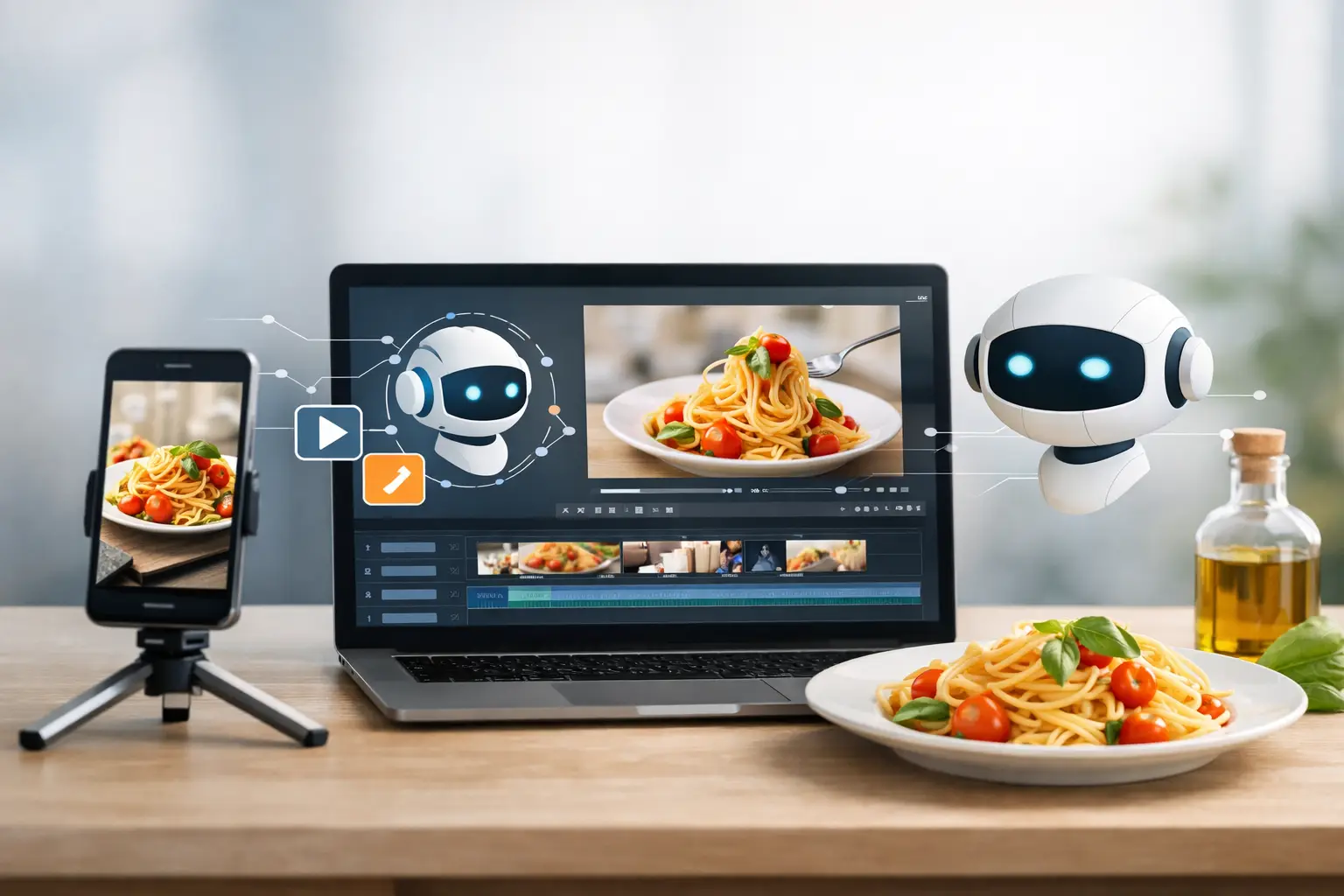
A burger launch used to mean booking a photographer, styling ingredients under hot lights, shooting dozens of takes, then waiting on edits for social cutdowns. Now the bottleneck is different. Most food teams do not struggle with ideas. They struggle with volume, turnaround, and consistency. That is exactly where an ai food video editor starts to make commercial sense.
For restaurants, CPG brands, agencies, and social teams, the real value is not novelty. It is output. If you need motion assets for paid ads, menu boards, product pages, Reels, or launch campaigns, an AI workflow can reduce the time between concept and publishable food video from days to hours. The key is choosing a tool built for food, not forcing a general-purpose editor to handle one of the hardest visual categories.
What an ai food video editor actually does
An ai food video editor is not just a timeline with automation layered on top. In a food content workflow, it should help generate, animate, refine, and standardize visuals that make dishes look appetizing and campaign-ready. That means handling details generic tools often miss, like sauce texture, steam behavior, crisp edges, layered ingredients, glass reflections, and lighting that makes a product look premium instead of artificial.
For commercial teams, editing is only part of the job. You also need visual consistency across multiple assets. A sandwich promo, a dessert ad, and a beverage loop should still feel like they belong to the same brand system. A food-specific AI tool can help by keeping composition, styling direction, and output quality more controlled from the start.
This is where the category matters. Food is unusually unforgiving. If cheese stretches the wrong way or a drink splash looks physically off, viewers notice immediately. The closer a platform is to the food vertical, the more usable the output tends to be for real campaigns.
Why food businesses are switching to AI video workflows
The shift is less about replacing every shoot and more about removing avoidable production overhead. A single short-form campaign can require multiple aspect ratios, hook variations, seasonal treatments, and product-specific edits. Traditional production handles hero content well, but it gets expensive when every new idea needs another setup.
An ai food video editor changes that math. Instead of treating every asset like a mini shoot, teams can generate motion content in batches, test creative faster, and keep paid and organic channels stocked without rebuilding the process each time.
There is also a staffing advantage. Many food businesses do not have an in-house motion editor, food stylist, and production coordinator. They have a marketing manager, maybe a designer, and a calendar full of promotions. AI tools fit that reality better when they are simple enough for non-technical users but structured enough to support agency-grade output.
Where an ai food video editor delivers the most value
The strongest use cases are repeatable, high-frequency content needs. Social ads are an obvious fit because teams often need several versions of the same message. One dish, three audiences, four hooks, and five crop formats can create a surprising amount of editing labor.
Menu launches and limited-time offers are another good match. These campaigns move fast and often have a short shelf life. Spending heavily on full production for every seasonal item is not always practical. AI-generated food video can help teams create strong launch assets without stretching budget or timeline.
E-commerce teams also benefit. Product pages convert better when buyers can see texture, movement, pour shots, serving ideas, or animated packaging visuals. Short clips can improve product presentation without requiring a fresh studio shoot for every SKU or flavor variation.
For restaurant groups and franchises, consistency is a major factor. Localized marketing still needs to look like the same brand. AI workflows can make it easier to maintain a repeatable visual standard across stores, promotions, and channels.
What to look for in a food-specific platform
A useful AI video tool for food should do more than generate motion. It should support an end-to-end content workflow that fits commercial production. That starts with food realism. If the visual quality is not convincing, the speed advantage does not matter.
The next factor is control. Marketers need to guide composition, styling, camera behavior, and brand direction without wrestling with a highly technical interface. Good output should be fast, but it should not feel random. You want predictable results that can be reused across campaigns.
It also helps when the platform reflects actual production usage. Credit-based systems, plan tiers, and clear video allocation can be useful if they map to how often a team creates content. A restaurant owner running occasional promotions has different needs than an agency producing monthly assets for multiple food clients. Transparent usage structure makes it easier to plan output and scale without guesswork.
A platform like Umami AI stands out in this area because it is built around food visuals specifically, rather than trying to be all things to all categories. That narrower focus is practical. It helps teams move faster on food content because the workflows, outputs, and generation logic are already aligned with what food marketers need.
The trade-offs you should be aware of
An ai food video editor is not the right answer for every asset. If you are producing a flagship TV commercial, capturing a chef personality, or documenting a real location experience, live-action production still has advantages. Human performance, real-world ambiance, and highly specific storytelling often work better on set.
AI also depends on direction quality. A weak prompt, unclear creative brief, or inconsistent brand reference can lead to uneven results. The tool may be fast, but speed does not replace decision-making. Teams still need to know what they are trying to communicate and where the asset will run.
There is also a difference between acceptable and excellent. Some AI content is good enough for testing but not strong enough for a core brand campaign. That does not make the workflow ineffective. It just means asset importance should guide production choice. Hero moments may still deserve custom photography or video, while supporting content can be generated at scale.
How to use AI video in a practical content stack
The best setup is usually hybrid. Keep traditional production for your highest-stakes brand moments, then use AI for the content layers around them. That includes product variations, promotional cutdowns, channel-specific edits, seasonal refreshes, and test creative.
A strong workflow often starts with one approved visual direction. From there, teams generate multiple food scenes or compositions, turn selected assets into motion, and adapt them by format and audience. This keeps the campaign visually consistent while expanding output without repeating the full production cycle.
For example, a beverage brand can build a polished hero image system, then use AI animation and video generation to create looping social clips, ad variants, and PDP motion assets from the same visual direction. A restaurant can take one new menu item and quickly produce launch teasers, price-point promos, and vertical clips for local store marketing.
This approach is especially useful when timing matters. If your campaign window is short, a fast AI workflow can turn approved concepts into deployable assets while the promotion is still relevant.
Who should use an ai food video editor now
If your team creates food content every week, the case is strong. The more often you publish, test, or refresh, the more value you get from reducing setup time and post-production friction. This applies to social media managers, performance marketers, agencies with restaurant clients, ghost kitchen operators, and e-commerce teams with large product catalogs.
If your content volume is low and your brand relies heavily on documentary-style storytelling, the value may be more limited. In that case, AI may still help with supplemental assets, but it may not become your main production method.
The deciding factor is usually not company size. It is content demand. A single-location restaurant running constant offers may benefit more from an AI workflow than a larger brand with only a few campaigns per quarter.
The real advantage is production speed with control
There are plenty of AI tools that can generate video. Fewer can do it in a way that fits the operational needs of food businesses. That is the difference between a novelty tool and a production tool.
A good ai food video editor gives teams faster turnaround, more testing capacity, and a cleaner path from concept to publishable asset. It cuts wasted production effort without forcing brands to lower their standards. For food marketers, that is the point. More content only helps if it still looks like something worth buying.
The smartest teams will not ask whether AI replaces food production. They will ask where it removes the most friction and creates the most output. That is where the gains start, and where better campaigns usually follow.