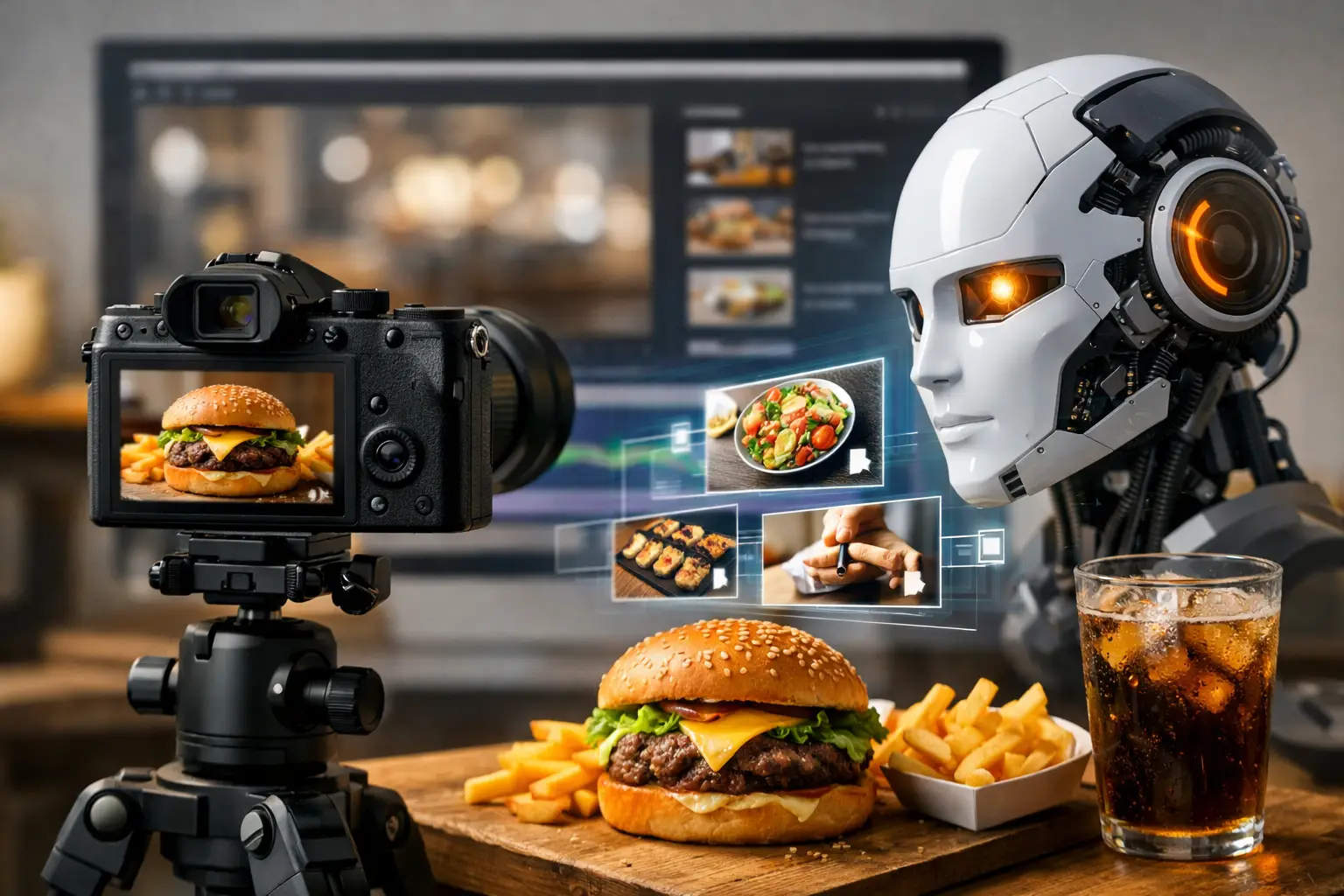
A late menu change, a new seasonal launch, a paid social campaign that needs five video variants by Friday - this is where an ai food video generator stops being a novelty and starts being operationally useful. For food brands, restaurants, agencies, and e-commerce teams, the real question is not whether AI can animate food content. It is whether it can produce commercial-grade assets fast enough, consistently enough, and cheaply enough to replace part of a traditional production workflow.
That depends on the tool. General AI video platforms can produce motion, but food is a category where detail matters more than most teams expect. Texture, steam, glaze, crumbs, pour behavior, garnish placement, lighting falloff - if those signals look off, the content feels synthetic immediately. A specialized ai food video generator is valuable because it narrows the problem. Instead of trying to create everything for everyone, it focuses on one visual category where appetite appeal and product accuracy directly affect conversion.
What an ai food video generator actually needs to do
For commercial use, motion alone is not enough. A food video asset has to look edible, on-brand, and usable across channels. That means the system needs to generate visuals that hold up in short-form social, paid ads, menu boards, landing pages, and product pages without forcing a creative team into heavy cleanup.
In practice, that requires a few things working together. First, the underlying food imagery has to be strong. If the source frame looks generic or inconsistent, animation only amplifies the problem. Second, the motion has to fit food behavior. A burger reveal, coffee swirl, melting cheese pull, or sauce drizzle should feel controlled rather than random. Third, the output has to fit a production model marketers can actually use, with repeatable workflows, manageable credit usage, and clear paths for scaling volume.
This is where category specialization matters. A vertical tool built for food content can tune prompts, styles, composition logic, and animation outputs around what food businesses need most: speed, consistency, and appetite-driven visuals that are ready to publish.
Why food teams are moving faster with AI video
Traditional food video production still works when the budget, timeline, and logistics make sense. A hero campaign, a national launch, or a flagship brand film may still justify a full crew. But most commercial content needs are not hero campaigns. They are recurring, channel-specific assets that support weekly promotions, product updates, retargeting ads, seasonal offers, and ongoing social calendars.
That is where an ai food video generator has a clear advantage. It compresses the time between idea and output. Instead of sourcing props, booking a photographer, styling a set, shooting multiple setups, and editing deliverables, a team can create visual concepts and iterate quickly in one workflow.
The cost structure changes too. Food shoots are expensive because they combine labor, ingredients, styling, equipment, and revision constraints. AI shifts much of that into a software model built around subscriptions and credit usage. For many operators, that is easier to budget and easier to expand when content demand spikes.
The trade-off is that AI is not a one-to-one replacement for every type of production. If a brand needs exact package compliance, highly specific legal claims, or frame-perfect replication of a real item, human oversight still matters. The best use case is high-volume commercial content where speed and flexibility are more valuable than physical production accuracy at every pixel.
Where an AI food video generator performs best
The strongest results usually come from short-form assets with a clear visual job. Think product reveals, ingredient motion, table spreads, drink pours, dessert close-ups, or animated stills that turn static product shots into more dynamic campaign assets.
For restaurants, that often means promo clips for menu items, limited-time offers, and delivery platform creative. For consumer brands, it can mean paid social variants, PDP visuals, launch teasers, and lifestyle product loops. Agencies use the same type of output to test more concepts without tying every idea to a production schedule.
This matters because content volume is no longer optional. Most food marketers are not trying to make one perfect asset. They are trying to produce enough quality creative to keep channels active, test performance, and support multiple offers at once. An AI workflow works best when it helps teams produce more useful assets per week, not just more interesting demos.
What to evaluate before you choose a platform
The first factor is category fit. A general AI tool may be impressive, but if it struggles with food texture, plating, glass reflections, packaging context, or realistic ingredient behavior, teams will lose time fixing outputs or rerunning generations. Food-specific tooling reduces that friction.
The second factor is workflow clarity. Businesses do not just need a generation model. They need a system for creating, refining, animating, and exporting assets without unnecessary handoffs. If image creation and video generation live in separate tools with inconsistent results, production slows down.
The third factor is commercial practicality. That includes plan structure, credit logic, and whether the platform supports repeated usage by teams that need output at scale. A good product should make it obvious what different usage levels look like, from occasional social content to heavier ad production.
The fourth factor is consistency. One strong clip is not enough. Teams need visual continuity across a campaign, a product line, or a monthly content calendar. If the platform cannot sustain a recognizable style across outputs, the operational value drops.
How credit-based AI video fits real production needs
For food marketers, credit-based systems tend to work well when the platform is transparent. A smaller operator may only need a manageable number of videos each month for menu promos and local ads. A larger team may need room for concept testing, variants, and ongoing creative refreshes.
That is why tiered subscriptions are useful in this category. They map to actual output volume. Starter plans make sense for smaller businesses or occasional campaigns. Pro-level access usually fits in-house marketing teams and agencies producing more consistently. Higher tiers support brands with heavier commercial demand, broader channel coverage, and a stronger need for throughput.
This model also creates a cleaner path for scaling. Teams can start with a predictable monthly allocation, monitor credit burn, and then upgrade or add capacity when volume increases. From a business standpoint, that is easier than constantly pricing custom production for every campaign request.
A specialized platform like Umami AI fits this logic because it is built around food visuals specifically, not as a broad creative tool with food as one use case among many. That focus matters when the goal is not experimentation for its own sake, but repeatable commercial output.
The trade-offs teams should be honest about
AI-generated food video is fast, but it is not automatic. Good output still depends on direction. Teams need to know what they are asking for, what style they want, and how the asset will be used. A vague request usually produces a vague result.
There is also a difference between content that looks good in a feed and content that is suitable for every regulated or product-specific environment. If exact nutritional representation, packaging detail, or product dimensions are critical, review steps are necessary. AI is strongest when it accelerates creative production, not when it removes judgment.
Another trade-off is volume versus precision. The more a team values rapid testing and broad asset coverage, the more AI makes sense. The more they need exact duplication of one physical item under controlled conditions, the more they may still rely on traditional shoots for certain deliverables.
That is not a weakness. It is just the practical line between scalable content production and high-control production work.
What smart teams do next
The best way to evaluate an ai food video generator is not by asking whether it can replace your entire content stack. Ask whether it can remove the slowest, most expensive part of your current workflow. If your team needs more launch assets, more ad variants, more social clips, or more menu visuals without adding production overhead, that is where the value shows up first.
Start with one campaign type. Test a product promo, a limited-time offer, or a seasonal launch. Measure output speed, revision time, and how many usable assets you get from the credits consumed. If the tool helps your team publish faster without sacrificing visual quality, you have a strong case for making it part of your ongoing production system.
For food businesses, speed is rarely the only goal. The real goal is producing more content that looks good enough to sell. When an AI workflow gets you there with less friction, it becomes less about automation and more about operational leverage.