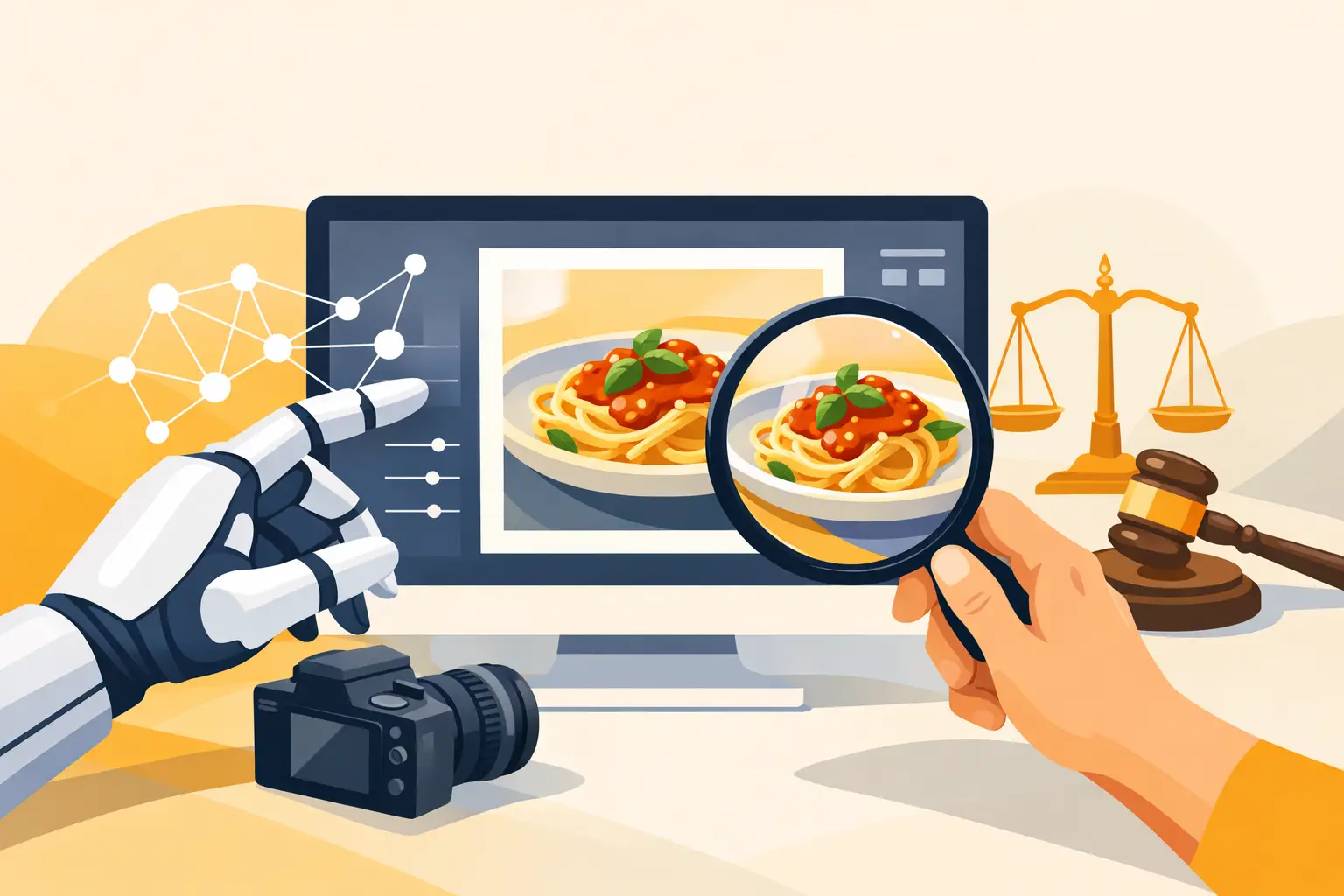
A polished AI image can make a new menu item look campaign-ready before the kitchen has scheduled a shoot. That speed is useful, but are AI food photos legal for commercial use? Usually, yes - provided the image is created, reviewed, and used with the same care a business would apply to any other advertising asset.
The legal risk is rarely that an image was made with AI. The risk comes from what the image contains, what it implies to customers, and whether your business has the right to use the final output. For restaurants, packaged food brands, agencies, and ecommerce teams, the practical question is not whether to avoid AI visuals. It is how to build a workflow that keeps production fast without creating avoidable rights or advertising problems.
Are AI Food Photos Legal for Ads and Menus?
In the United States, there is no general law that bans AI-generated food photography in commercial advertising, menus, websites, or social media. A food business can use an AI-generated burger image in a launch campaign, a delivery brand can create lifestyle visuals for paid social, and a beverage company can develop new seasonal concepts before a product shoot.
That permission has limits. Commercial use needs to account for copyright, trademarks, contracts, consumer protection rules, and the accuracy of the claims your visual makes. The same image may be low-risk in an internal mood board and high-risk on a product detail page where it represents a specific item for sale.
The safest approach is simple: treat AI output as a commercial asset that needs approval, not as an automatically cleared file. Confirm the platform permits commercial use under your plan, check the visual for protected material or misleading details, and keep records of the prompt, output, edits, and license terms.
The Legal Issues That Actually Matter
Commercial rights depend on your AI platform terms
Your first check is the agreement with the tool that generated the asset. Some platforms allow commercial use only on paid plans. Others reserve certain rights, restrict high-risk uses, or place responsibility for legal clearance on the customer. Terms can also change over time.
Before a campaign goes live, confirm that your subscription tier covers the intended use: paid advertising, packaging concepts, client work, resale, or high-volume ecommerce content. If an agency is creating images for a restaurant or food brand, make sure the client can use the final assets under the applicable terms.
This is an operational detail, but it matters. A visually strong image is not useful if a procurement team, client, or retailer later asks for proof that the business had commercial rights to use it.
Copyright is not the same as commercial permission
AI images create a more complicated copyright picture than conventional photography. In the US, copyright protection generally requires meaningful human authorship. A purely AI-generated output may not receive the same copyright protection as a photograph composed and taken by a person.
That does not automatically make the image free for competitors to copy, nor does it mean you cannot use it commercially. It means exclusivity may be less certain, especially where the human creative contribution is limited.
For higher-value brand assets, add human direction and original work around the output. A marketer might set the campaign concept, art-direct the composition, select and revise outputs, combine the image with original typography, and make material edits in post-production. Those steps can strengthen the human-authored elements of the finished creative, even if they do not turn every generated pixel into protected copyright.
There is a second copyright issue: an AI output can still look too close to an existing photograph, illustration, character, or distinctive creative style. Do not ask for a recreation of a competitor's campaign, a famous food photographer's image, or a recognizable copyrighted character. If the result appears substantially similar to a known work, do not publish it just because the tool generated it.
Trademarks and packaging need a close review
Food visuals often include more than food. They include bottle labels, wrappers, delivery bags, signage, kitchen equipment, and branded packaging. AI can generate distorted logos, invented brands that resemble real ones, or labels that accidentally borrow protected trade dress.
Review every visible package and sign at full resolution before publishing. Replace questionable labels with approved brand assets, remove logos you do not have permission to show, and avoid using a competitor's product to imply endorsement or comparison without legal review.
This applies to your own brand, too. AI can misspell a logo or change a product's package color and shape. That may not create a trademark dispute, but it can weaken brand consistency and confuse shoppers.
Food advertising cannot mislead customers
This is the issue that deserves the most attention. Federal and state consumer-protection laws generally prohibit deceptive advertising. If an AI image is used to sell a specific meal, product, or service, it cannot materially misrepresent what a customer will receive.
Food photography has always involved styling. A hamburger can be photographed under ideal lighting, and a beverage can be shown with a polished garnish. AI does not eliminate that reality. But the image becomes riskier when it shows portion sizes, toppings, ingredients, textures, or serving suggestions that are meaningfully different from the actual product.
For example, do not use a generated image showing double the chicken, a premium steak cut, or fresh fruit that is not included with the order. Be especially careful with subscription meal services, delivery listings, and packaged-food product pages, where the image may be a shopper's primary basis for purchase.
Claims deserve separate review. An appetizing image should not imply that a product is organic, allergen-free, low-calorie, plant-based, or made with a particular ingredient unless the business can support that claim. AI may add ingredients or visual cues that your actual recipe does not include.
People, places, and endorsements can create separate risks
If your food visual includes a realistic chef, influencer, customer, restaurant interior, or event setting, verify that it does not resemble a real person or mislead viewers about an endorsement. Using a synthetic person is generally different from using someone's likeness, but a close resemblance can still create problems under state right-of-publicity laws.
Avoid prompts that name a real chef, celebrity, or creator. Do not present an AI-generated person as a genuine customer testimonial. If an image is designed to look like it was captured at a real restaurant location, make sure it does not imply a false affiliation or depict conditions that are inconsistent with the business.
Do You Need to Label AI Food Images?
There is no one-size-fits-all US rule requiring every AI-generated food image to carry an AI label. Whether disclosure is needed depends on the channel, the platform's policies, and whether the lack of disclosure would mislead a reasonable consumer.
For a conceptual campaign visual, disclosure may be unnecessary. For a menu image representing a real dish, the better question is whether the image accurately portrays the item. If it does not, a disclaimer such as “serving suggestion” may help in some contexts, but it will not fix an image that is materially deceptive.
Platforms, retailers, and advertising partners may also have their own rules for synthetic media. Build disclosure review into campaign approval rather than assuming a label is never required.
A Practical Approval Workflow for Food Teams
Fast production works best when legal review is built into the creative process, not added after a campaign is designed. Use a short approval workflow for every public-facing AI asset:
- Confirm your plan and platform terms allow the intended commercial use.
- Check for recognizable logos, labels, characters, copyrighted imagery, and celebrity likenesses.
- Compare food quantity, ingredients, packaging, and presentation against the product actually offered.
- Review captions and on-image copy for unsupported nutrition, sourcing, health, or dietary claims.
- Save the final approved file along with the generation date, tool terms, prompts, and material edits.
Not every social post needs outside counsel. A campaign involving national media spend, packaging, regulated claims, celebrity-style likenesses, or a high-value product launch may. Scale the review to the risk and the visibility of the asset.
Build Speed Without Trading Away Trust
AI food visuals are most effective when they extend a disciplined content system. Use them to test concepts, create seasonal variations, generate social-first compositions, and keep campaigns moving between studio shoots. Use real photography when product accuracy, packaging detail, or a distinctive physical experience is central to the sale.
Platforms built specifically for food workflows, including Umami AI, can help teams generate more on-brand visual options quickly. The final responsibility still belongs to the business publishing the image. Keep the creative ambitious, keep the product truthful, and make approval a repeatable part of production.