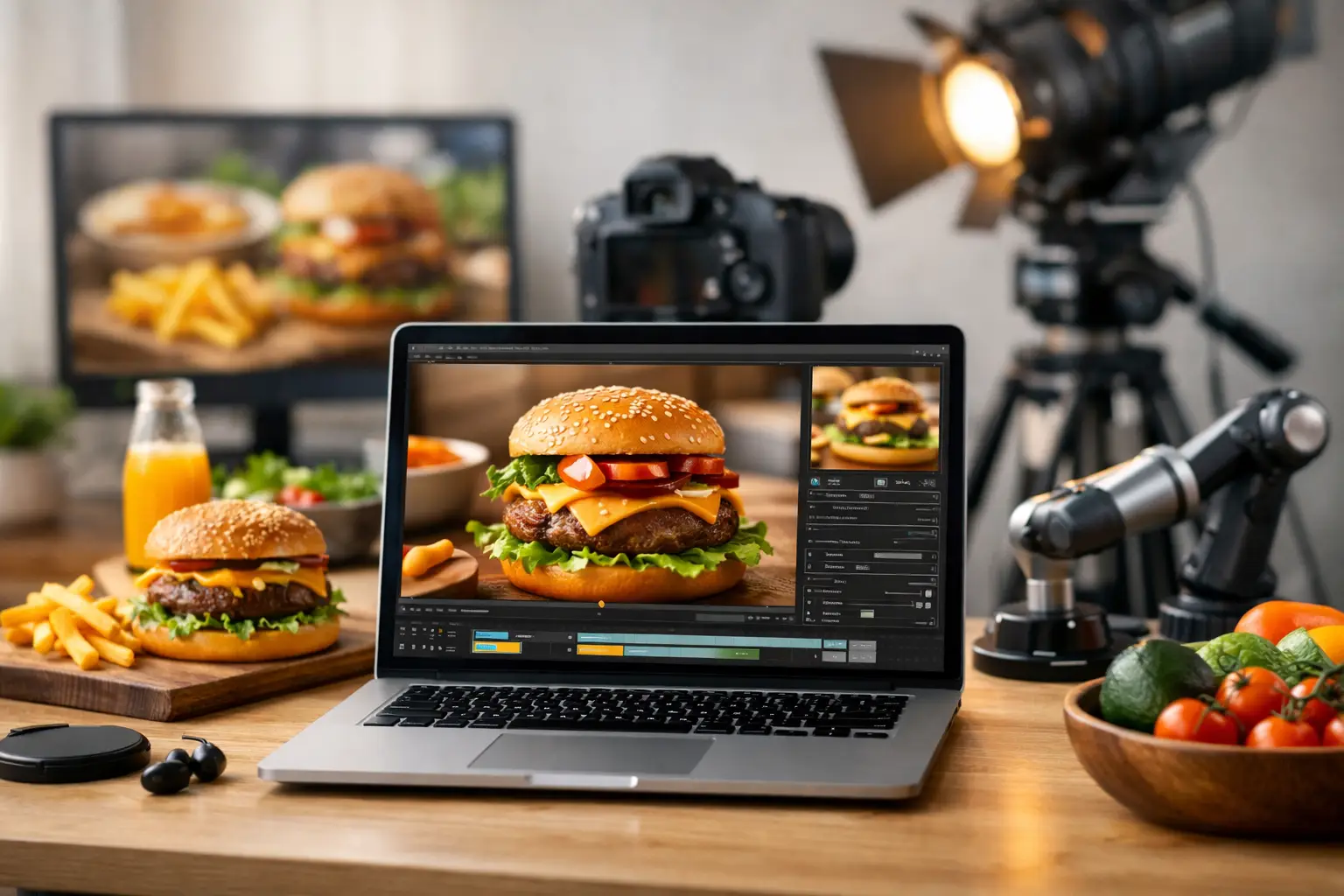
A generic video generator can make motion. That does not mean it can make food sell. If you are searching for the best ai food video generator, the real question is not which tool can animate a plate of pasta. It is which one can produce food content that looks appetizing, stays on-brand, and works fast enough for a real marketing workflow.
That distinction matters because food is one of the hardest visual categories to fake well. Texture, steam, gloss, sauce movement, crumb detail, garnish placement, and lighting all affect whether a viewer pauses or scrolls. A platform that performs well for avatars, product explainers, or cinematic B-roll may still fall short when the goal is conversion-ready food creative.
What the best ai food video generator needs to do
For food businesses, the benchmark is commercial output, not novelty. A useful platform should help teams create short-form assets for paid social, menu boards, product pages, launch campaigns, and seasonal promotions without rebuilding the process every time.
That means the best ai food video generator should handle three jobs well. First, it should generate food visuals that already look strong before animation starts. Second, it should turn those visuals into video clips that feel intentional rather than random. Third, it should support volume, because one hero clip is nice, but most brands need dozens of variations across formats and campaigns.
Speed matters, but speed alone is cheap. If the output needs heavy retouching, manual editing, or repeated prompt retries, the workflow is not actually efficient. The better metric is how quickly a team can move from concept to usable asset.
Why general AI video tools often miss on food
Most broad AI video products are built to serve many use cases at once. That gives them range, but it often weakens category-specific performance. Food marketing is not just another prompt category. It has stricter visual expectations than many adjacent spaces.
When a burger looks structurally wrong, when melted cheese behaves like plastic, or when a drink splash breaks physics, viewers notice immediately. Food buyers may not know why an image feels off, but they can tell when it lacks realism or appetite appeal. That is a problem for restaurants, CPG brands, grocery campaigns, and delivery-first businesses where visual trust drives clicks and orders.
A specialized platform has an advantage here. It can be tuned for food composition, plating logic, ingredient texture, and the styles brands actually need, from clean e-commerce product motion to richer social-first animation. That narrower focus is often what separates content that looks like a demo from content that looks ready for a campaign.
How to evaluate the best ai food video generator
The wrong way to compare platforms is to ask which one has the longest feature list. The right way is to test whether the tool fits your production model.
Start with visual quality. Can it produce food that looks edible, polished, and commercially useful across categories like beverages, desserts, packaged goods, plated meals, and ingredients? A strong tool should not force you into one visual style.
Then look at control. Food teams rarely need abstract motion. They need practical assets with specific framing, aspect ratios, pacing, and brand consistency. If the platform gives you motion but not enough control over the source visual, the process gets messy fast.
Next is throughput. This is where many tools break down. A freelancer making occasional social posts can tolerate a slower workflow. A multi-location restaurant group, agency, or in-house brand team usually cannot. They need repeatable output, clear usage limits, and a system that scales without turning every campaign into a production bottleneck.
Finally, check cost logic. Subscription and credit structures matter more than most buyers expect. A low entry price can look attractive until you realize video generation burns through credits too quickly for active commercial use. The best option is usually the one that matches your monthly content volume, not the one with the cheapest headline number.
Best ai food video generator for commercial teams
If your goal is business-ready food content rather than general AI experimentation, specialization is usually the smarter bet. A food-focused platform is built around the kind of assets brands actually need: product visuals, plated dishes, ingredient-forward scenes, menu content, and short-form motion derived from those visuals.
That is where a platform like Umami AI makes practical sense. Instead of treating food as one prompt category among hundreds, it is designed around food visual production. That affects the entire workflow, from image generation to composition and animation. For commercial teams, that narrower scope is not a limitation. It is the point.
The benefit is operational clarity. You are not forcing a general-purpose model to approximate food styling. You are using a system built to produce food assets faster and at scale. For marketers, agencies, restaurants, and e-commerce teams, that can reduce both production time and the hidden costs that come from unusable outputs.
What matters more than flashy demos
Many AI video tools look impressive in short demos. The issue is whether they hold up under repeated use. One good-looking clip is easy to market. Consistent output across a month of promotions is harder.
Food brands need reliability in a few specific areas. They need visual consistency between assets, enough quality to run content in paid channels, and workflows simple enough for non-technical teams to use without creative drift. If a tool requires expert prompting for every useful result, it may still be a poor fit for an operations-driven marketing team.
This is why category fit matters more than broad capability. A general platform may offer more experimental range. A specialized food platform is often better at producing the assets that actually get approved and published.
Who should use a specialized food video generator
The best ai food video generator is not the same for every buyer. A creator making one-off content for entertainment may prefer flexibility over precision. A restaurant group launching weekly offers usually needs the opposite.
If you manage recurring food promotions, menu updates, seasonal campaigns, or product launches, a specialized generator is the better fit. It supports the real business need, which is ongoing content production without the cost and coordination of repeated photo shoots.
Agencies also benefit when they handle multiple food clients at once. Instead of building each concept from scratch with mixed tools, they can move faster with a system that is already aligned to the category. The same goes for ghost kitchens and delivery brands, where speed and asset turnover are often tied directly to revenue performance.
For enterprise or high-volume teams, plan structure becomes part of the product decision. Image credits, video credits, and upgrade paths are not just billing details. They determine whether the tool can support the pace of your actual content calendar.
Trade-offs to consider before choosing
Specialized tools are usually stronger within their lane and narrower outside it. If your team also needs non-food explainer videos, avatar content, or cinematic brand films, you may still need additional software. That is not a flaw. It is simply a sign that the platform is optimized for a commercial food workflow rather than every creative use case.
There is also a difference between generating video from scratch and animating strong source visuals. For many food brands, the second path is more useful. Starting with a high-quality food image and then turning it into motion often gives better control and more predictable results than trying to generate a full scene as video first.
That is a practical advantage, not a compromise. Most short-form food marketing content does not need long, complex narrative sequences. It needs eye-catching motion built from polished visuals that can be deployed quickly across channels.
How to pick the right platform for your team
If you are deciding now, think less about AI hype and more about workflow fit. Ask how many assets you need per month, which channels you publish on, who on the team will create them, and how much brand consistency matters. Those answers will tell you more than any feature matrix.
For smaller operators, the best option is often a platform that is easy to start with and affordable enough to use regularly. For agencies and larger brands, the better choice is usually the one with clearer scaling logic, more production capacity, and less creative waste.
The best ai food video generator is the one that helps your team produce usable food content quickly, repeatedly, and without unnecessary friction. In this category, specialization tends to win because food marketing has less room for visual error than most industries.
If your business depends on making food look worth buying, choose the tool that treats that job as its core function, not as a side effect of a broader model.