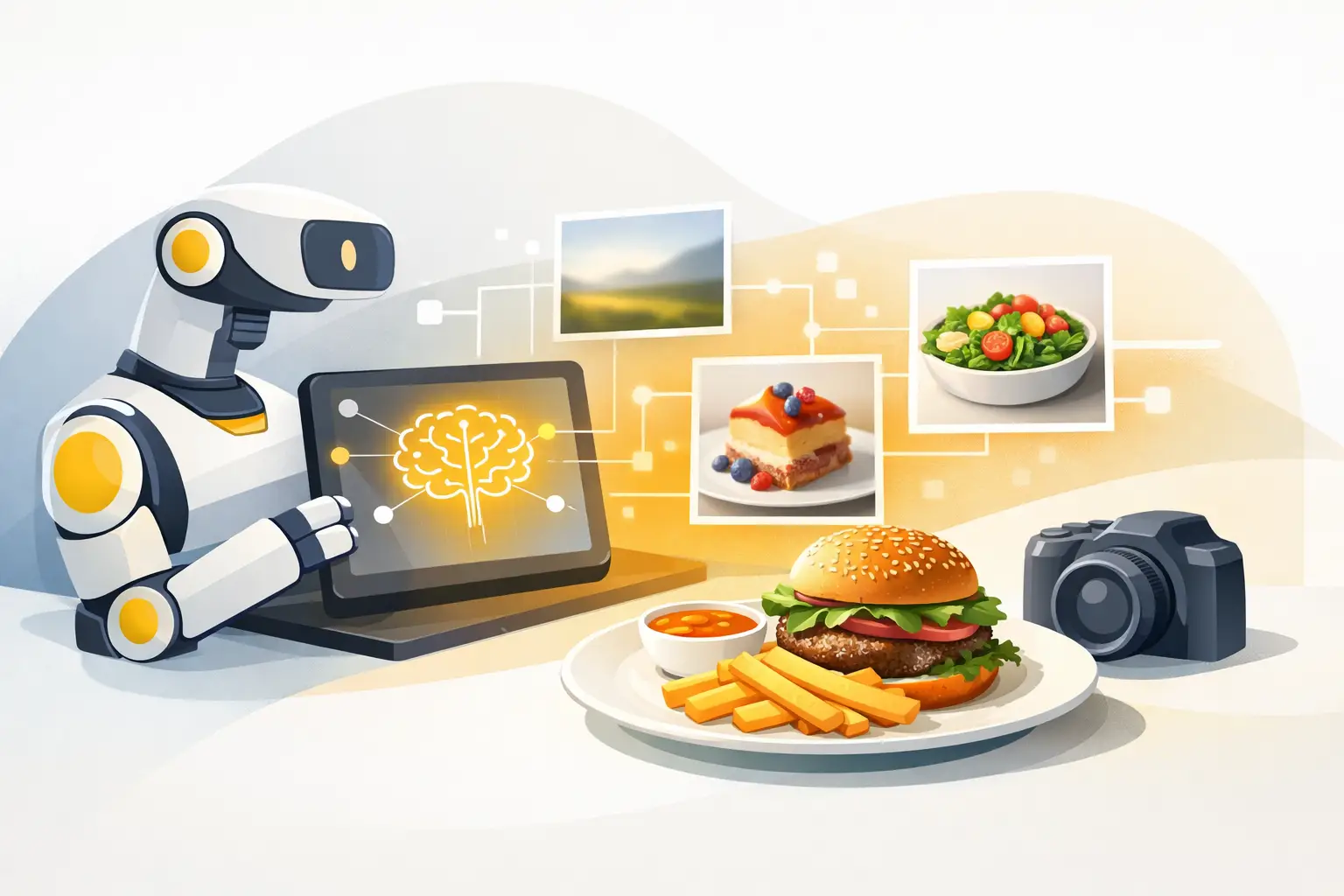
A burger ad that looks great once is easy. Producing 40 on-brand food visuals by Friday for paid social, menu boards, delivery apps, and email is the real test. That is where the search for the best ai for food image generation gets practical fast. For most food businesses, the right tool is not the one that makes the single prettiest image. It is the one that can produce appetizing, usable, repeatable assets at commercial speed.
What actually makes the best AI for food image generation
If you are evaluating tools for restaurant marketing, packaged food, beverage campaigns, or agency production, image quality is only one part of the decision. Food content has a higher bar than many other categories. A plate can look glossy but still fail if the garnish placement is odd, the textures feel synthetic, or the lighting does not match the brand.
The best ai for food image generation usually gets four things right at the same time: realism, consistency, speed, and workflow control. Realism matters because food is sensory and viewers notice when cheese stretches the wrong way or steam looks pasted on. Consistency matters because one strong hero image is not enough if the rest of the campaign drifts in style. Speed matters because most teams are not making one image, they are producing batches across channels. Workflow control matters because marketers need specific outputs, not random creativity.
General-purpose image models can produce impressive food shots. But they often need more prompt work, more retries, and more editing to reach brand-ready results. That can be fine for experimentation. It is less efficient when your team needs ten campaign variations, seasonal updates, and localized assets every week.
General AI tools vs. food-specific platforms
This is the main trade-off in the category. General image generators are flexible. They can create almost any subject, any mood, and any visual style. If your team works across many industries, that breadth can be useful.
The downside is that food is not just another visual subject. It has product-specific expectations. Fried textures need to read crisp, sauces need believable viscosity, ice needs to feel cold instead of plastic, and plating needs to make sense. With broad image models, getting that level of accuracy can take more iterations than teams expect.
Food-specific platforms narrow the problem. They are built around food outputs, composition controls, and commercial use cases like menu imagery, promotional creatives, product launches, and short-form content. That narrower focus often means less wasted time and fewer unusable generations. For a restaurant group or food brand, that can matter more than having infinite stylistic range.
This is why the best choice depends on your workload. If you need occasional concept art, a general image tool may be enough. If you need production-ready food visuals at volume, specialization usually wins.
How to evaluate the best AI for food image generation for your team
Start with the asset volume you actually need. A solo operator posting three times a week has a different requirement than a multi-location chain managing ads, menus, web banners, and delivery app imagery. The right platform should match your monthly output without forcing you into a production bottleneck.
Then look at prompt reliability. In food marketing, vague outputs cost time. If your team asks for a top-down shot of spicy chicken tacos on a dark stone surface with high contrast lighting, the tool should get close quickly. You should not need ten prompt rewrites just to fix hand placement, plate shape, or background clutter.
Next comes consistency across variations. Commercial teams rarely stop at one image. They need alternate crops, seasonal treatments, channel-specific versions, and creative tests. The best tool should help you hold the product identity and visual direction steady across those versions.
Finally, assess how the platform handles production mechanics. Can non-designers use it? Can marketers create assets without a complicated setup? Are there clear usage tiers, predictable credit consumption, and enough control to scale output without constant intervention? These details sound operational because they are. In practice, they decide whether AI saves time or creates a new layer of work.
Where general-purpose AI tools still perform well
It would be a mistake to say broad image models have no place in food content. They are often strong for concept exploration, campaign brainstorming, or mood development. If your creative team wants to test a surreal dessert backdrop, a cinematic beverage scene, or a stylized seasonal campaign direction, general AI can move quickly.
They also work well when food is only one part of a larger visual mix. Agencies producing assets across retail, lifestyle, beauty, and hospitality may prefer a single flexible system for ideation.
But there is a difference between creative range and commercial fit. Many teams discover that broad models are useful at the start of a project and less useful when they need repeatable menu visuals, ad-ready product imagery, or a steady stream of on-brand assets that look like they came from the same campaign.
Why specialized tools tend to rank higher for commercial food content
A focused platform has a simpler job: make food look sellable. That sounds obvious, but it changes everything. The model, workflows, and output logic can be shaped around food photography standards rather than around every possible category on the internet.
That usually shows up in three ways. First, food-specific tools are more likely to produce appetizing textures and believable plating with less prompt friction. Second, they tend to be better aligned with production use cases such as social posts, menu imagery, product promos, and short-form branded visuals. Third, they often fit business workflows better, with subscription and credit structures that reflect recurring content needs instead of casual experimentation.
For teams that care about output volume, this matters more than novelty. The best ai for food image generation is often the one that reduces retries, shortens approval cycles, and gives marketers assets they can use the same day.
What to look for in pricing and usage models
Pricing is not just about monthly cost. It is about whether the platform matches your content cadence. A low entry plan can be useful for testing, but if every usable image burns through credits too quickly, the tool may become expensive at real production scale.
Look for clarity around how image credits and video credits are consumed, what is included at each tier, and how easy it is to add capacity when campaigns spike. This matters for agencies, restaurant groups, and e-commerce teams that may have uneven demand across the month.
A strong commercial platform should make it easy to start small, scale when needed, and avoid hidden complexity. That is one reason vertical SaaS products are gaining traction. They tend to package output around business usage rather than hobby usage.
The strongest fit for most food businesses
For most food brands, restaurants, ghost kitchens, and marketing teams, the best ai for food image generation is not the broadest model. It is the one built to handle food as a production category. That means fast generation, realistic results, repeatable quality, and a pricing structure that supports ongoing content creation.
This is where a platform like Umami AI fits cleanly. Its value is not that it tries to do everything. Its value is that it is purpose-built for food visuals and short-form commercial output. That focus makes it a better operational fit for businesses that need campaign-ready assets without planning another shoot, coordinating props, or waiting on post-production.
If your workload is food-first and volume matters, specialization is usually the smarter buy. If your workload is broad, experimental, and category-agnostic, a general model may still make sense. The decision is less about hype and more about throughput.
The right question to ask before you choose
Do not ask which tool makes the most impressive demo image. Ask which tool your team will still be using three months from now when the promo calendar is full, the spring menu needs a refresh, and paid social needs six more variations by end of day.
That is the standard that matters. The best platform is the one that keeps food content moving without lowering quality or adding production drag. Choose the tool that fits your volume, your workflow, and the way your business actually ships creative.