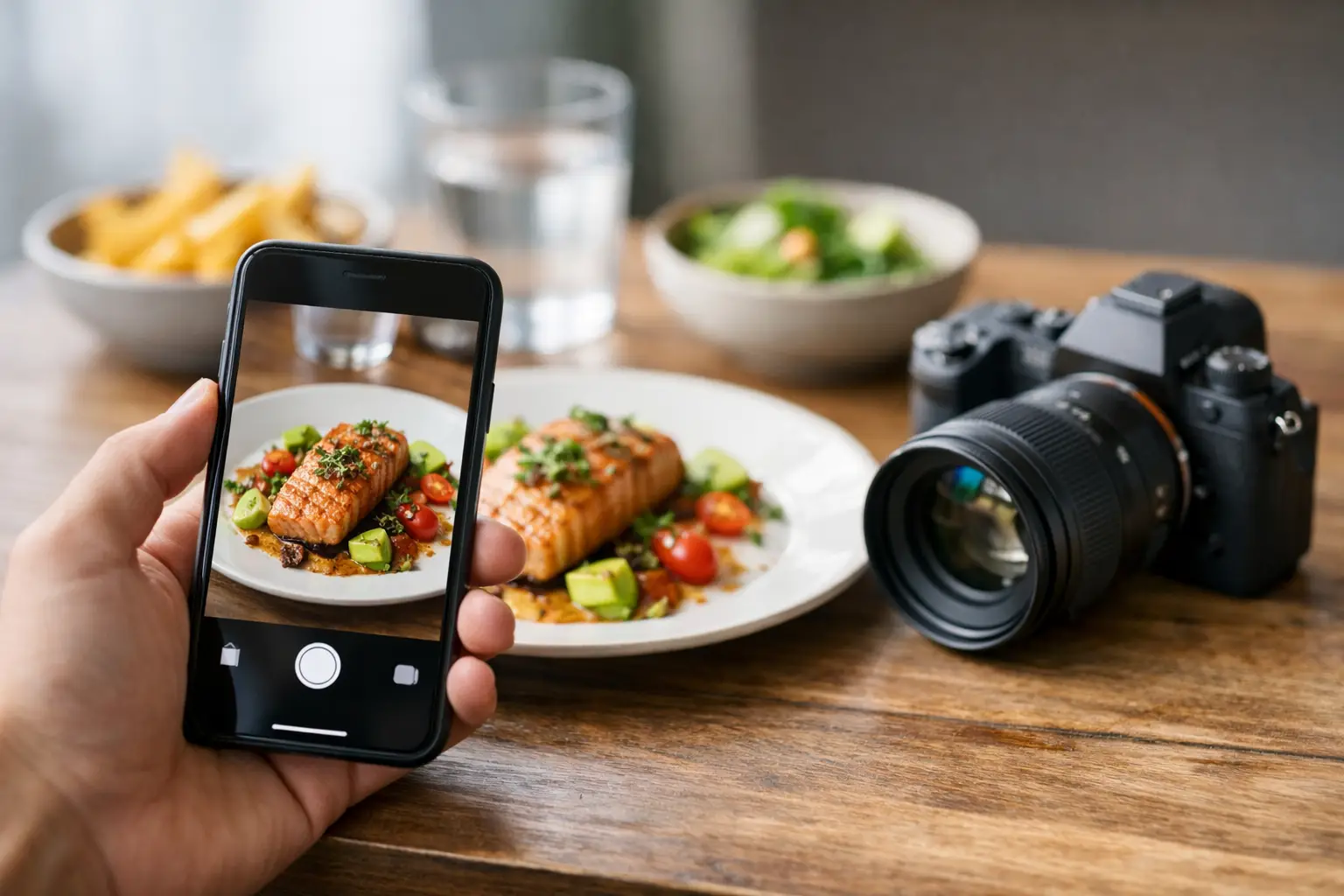
A burger shot that looks great on social can still fail on a delivery app, a menu board, or a paid ad. That is the real test when choosing the best ai for food pictures. For food businesses, the right tool is not the one that makes a nice image once. It is the one that can produce appetizing, brand-aligned visuals repeatedly, fast enough to support actual campaigns.
That changes the evaluation criteria. General image generators can create eye-catching food scenes, but commercial food content has tighter requirements. You need consistency across SKUs, believable texture, clean plating, usable aspect ratios, and a workflow that does not slow down your team. If you are selecting an AI tool for restaurant marketing, packaged food launches, or high-volume social production, those details matter more than novelty.
What makes the best AI for food pictures
Food imagery is unusually sensitive to small visual errors. A slightly wrong cheese pull, an unnatural sauce texture, or a garnish placed where it would never sit in real life can make the image feel synthetic. People may not always name the problem, but they notice it.
The best ai for food pictures needs to do four things well. First, it has to render food with realism. That means steam, gloss, crumb texture, grill marks, condensation, and ingredient separation should look credible. Second, it has to maintain consistency. If you create ten images for one product line, they should feel like they belong to the same campaign. Third, it has to support production speed. Marketing teams do not have time to rework prompts for hours just to get one usable hero image. Fourth, it has to fit commercial use, with outputs that are ready for menus, websites, paid social, product pages, and short-form video.
That last point often gets missed. The image itself is only part of the job. Teams also need control over composition, enough volume to support ongoing content calendars, and a cost structure that makes sense compared with repeated food shoots.
General AI tools vs food-specific platforms
The biggest divide in this category is not between one model and another. It is between general-purpose image AI and tools built specifically for food.
General tools are flexible. They can generate almost anything, which makes them useful for broad creative experimentation. If your team creates lifestyle scenes, packaging mockups, or abstract campaign concepts alongside food imagery, that flexibility can help. But flexibility also means more trial and error. A system trained and optimized for everything is rarely optimized for the exact visual logic of plated meals, beverage pours, bakery textures, or menu-ready product shots.
Food-specific platforms narrow the problem set. That usually leads to better food styling, more relevant composition defaults, and less prompt waste. For commercial users, that is a practical advantage, not a theoretical one. Less correction means faster throughput. Faster throughput means more assets live in market.
This is where a vertical tool has a clear edge. A platform like Umami AI is built around food visual production rather than generic image generation. That matters when the goal is not to make one impressive image, but to generate a reliable stream of food content for ads, menus, websites, and social channels.
Where generic AI tools still work well
There are cases where a general image model is enough. If you need concept boards, mood explorations, broad campaign ideation, or occasional one-off visuals, a general tool can be cost-effective. Teams with strong prompt-writing skills may also get acceptable results for simple food scenes, especially when realism is less critical than speed.
But there is a trade-off. General tools often require more iteration to avoid common food-image issues: melted elements that make no physical sense, inconsistent plating between outputs, distorted utensils, strange ingredient proportions, or an overall polished-but-fake look. That may be tolerable for brainstorming. It becomes expensive when your team is trying to hit weekly deadlines.
For operators running multiple locations or managing recurring promotions, the hidden cost is time. Every extra prompt cycle, regeneration pass, and manual correction step reduces the efficiency that made AI appealing in the first place.
How to evaluate the best AI for food pictures for business use
If you are comparing options, skip the broad feature lists and focus on workflow fit.
Start with output quality under realistic business conditions. Can the platform produce clean hero shots, overhead menu visuals, close-up texture shots, and seasonal campaign images without a complete reset each time? Food brands rarely need just one style. They need a repeatable range.
Then look at consistency. A single strong image is easy to demo. A set of 30 usable assets for one brand is harder. Ask whether the tool can maintain lighting direction, plating logic, color treatment, and brand feel across a campaign. This is especially important for restaurant groups, CPG brands, and agencies managing multiple accounts.
Speed matters just as much. A good platform should reduce production friction, not move it from photography into prompt engineering. If a non-technical marketer cannot generate useful content quickly, the tool may be powerful but operationally weak.
Pricing structure also matters more than many teams expect. Subscription and credit systems can work well when they match actual production volume. The right plan should let a team produce enough images and short-form assets without constant usage anxiety. If your workflow includes frequent refreshes for promos, paid ads, and product launches, you need a platform that scales cleanly.
The business case for specialized food AI
Traditional food photography still has value, especially for flagship campaigns, packaging hero assets, and highly controlled brand shoots. But it is not efficient for every content need. Most food businesses need more images than they can reasonably shoot.
That is why specialized AI is gaining traction. It closes the gap between expensive production and everyday content demand. Instead of organizing talent, props, lighting, locations, and post-production for each new promotion, teams can generate campaign-ready food visuals on demand. The savings are not only financial. They are operational.
For restaurant owners, that means launching new menu visuals faster. For social teams, it means keeping content calendars full without chasing a shoot every month. For agencies, it means serving more clients without expanding production overhead at the same rate. For e-commerce brands, it means testing more creative variants across channels.
The best platform is the one that turns that logic into a usable workflow. It should help teams create polished food content at scale, not just produce attractive examples in isolation.
Who should choose a food-specific platform
If your business depends on food imagery as a recurring sales asset, a specialized platform is usually the better fit. That includes restaurants, beverage brands, ghost kitchens, meal services, marketplaces, and agencies producing food campaigns for clients.
The case becomes stronger as volume increases. A solo operator posting a few times a month may tolerate a less specialized tool. A multi-location brand running seasonal offers, delivery app refreshes, social campaigns, and website updates needs reliability. At that point, workflow efficiency becomes part of the buying decision.
There is also a brand control angle. Food-specific platforms are better positioned to support composition and output patterns that feel commercially useful rather than artistically random. That makes them more practical for marketers who need assets that sell, not just images that impress.
So what is the best ai for food pictures?
For commercial food content, the best choice is usually not the broadest AI image tool. It is the one designed for food-first production. If your priority is realistic food rendering, repeatable brand consistency, and a faster path from idea to campaign asset, specialized food AI has the advantage.
General tools still have a place for experimentation and cross-category creative work. But when food is the product, specialization tends to produce better results with less waste. That is the difference between using AI as a novelty layer and using it as production infrastructure.
The right decision comes down to your content volume, quality bar, and how often your team needs new assets in market. If food visuals are central to revenue, choose the platform that treats them like a core workflow, not a side use case.
The fastest way to tell if a tool is right is simple: can it help your team create food images you would actually publish this week, at the volume your business needs next month?