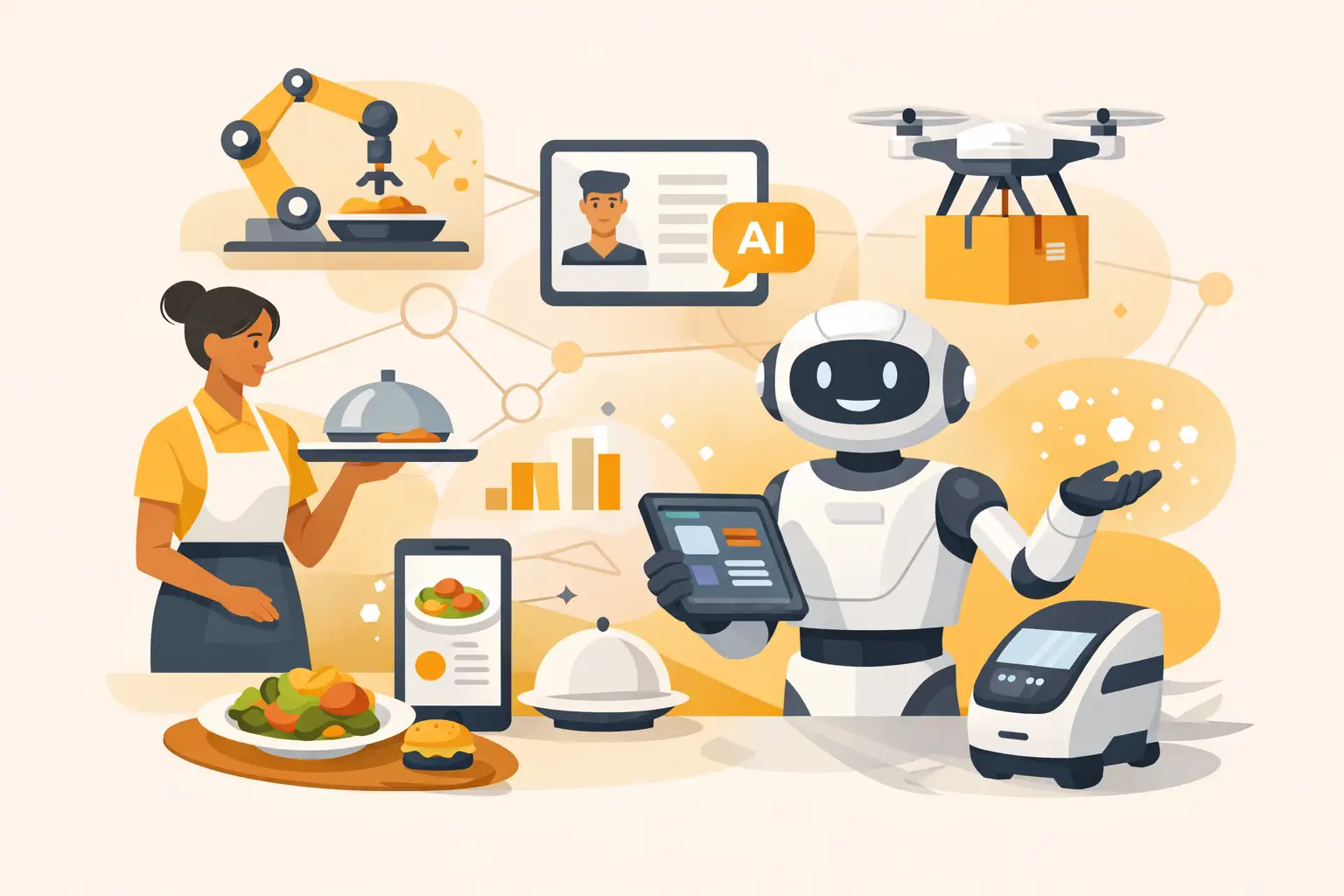
A restaurant can lose a Friday night before the first guest walks in: a weak promotion, an understaffed shift, a menu item that does not photograph well, or prep based on last week’s demand. The best ai tools for restaurants address those operational gaps with focused automation, not generic technology for technology’s sake.
The right stack depends on your bottleneck. A multi-unit operator may get the fastest return from forecasting and labor tools. A neighborhood restaurant running daily specials may need high-volume visual production first. Start with the recurring task that costs the most time, money, or missed sales, then choose software that fits the systems your team already uses.
What Restaurant AI Should Actually Improve
Restaurant AI is most useful when it turns existing data or repeatable work into a faster decision. That can mean predicting covers from POS history and weather, drafting campaign copy from a menu change, answering common guest questions, or generating a new set of food images for an offer that launches tomorrow.
It is less useful when it creates another dashboard nobody checks. Before buying a tool, identify the owner of the workflow, the input it needs, and the number that will show whether it worked. For visual production, that number could be assets published per week or cost per campaign. For scheduling, it might be labor percentage, overtime, or manager hours saved.
Accuracy also matters by use case. AI can speed up creative concepts and routine communications, but it should not invent allergen information, prices, operating hours, or reservation policies. Keep a human approval step for guest-facing details and any decision that affects staffing, food safety, or compliance.
The Best AI Tools for Restaurants by Job
1. Umami AI for food visuals at campaign speed
Food businesses need more than a good-looking image once a quarter. They need menu refreshes, paid social variations, delivery listings, holiday offers, launch creative, and short-form content that matches the brand. Umami AI is built specifically for generating commercial food images and video assets, making it a practical option for teams that need output volume without organizing a full shoot for every promotion.
Its advantage over a general image generator is focus. Food presentation, ingredient detail, plating, composition, and appetizing lighting are the job, not an edge case. Credit-based plans also make it easier to match usage to campaign demand. A smaller restaurant can start with a limited visual workflow, while an agency or multi-location brand can plan around higher image and video capacity.
The trade-off is straightforward: generated visuals should support real menu marketing, not misrepresent what guests receive. Use AI to create polished campaign assets, lifestyle framing, or concept visuals, then ensure the food, portions, and claims remain accurate to the actual offering.
2. ChatGPT or Claude for marketing and internal drafts
General-purpose language AI can reduce the blank-page problem. Restaurant teams use it to create first drafts for email promotions, social captions, staff training outlines, event descriptions, vendor communication, and standard operating procedures.
These tools work best with a clear brand brief. Give them your audience, menu details, preferred voice, offer restrictions, and an example of approved copy. A vague prompt produces vague output. A structured prompt can generate multiple usable angles for a brunch launch or loyalty campaign in minutes.
Do not treat the result as final copy. Review every price, date, location, dietary statement, and promotion condition. The tool is efficient at drafting and repurposing, but it does not know your current operations unless you provide the facts.
3. Restaurant365 for financial and back-office intelligence
For operators managing multiple locations or more complex back-office workflows, Restaurant365 combines restaurant accounting, inventory, scheduling, and operational reporting. Its value comes from consolidating the numbers managers typically chase across several systems.
AI-supported analysis can help teams spot food-cost variance, labor pressure, and unusual sales patterns sooner. This is a better fit for growing groups than for a single counter-service location with simple bookkeeping needs. Implementation requires process discipline, clean chart-of-accounts setup, and buy-in from finance and operations.
4. MarginEdge for invoice processing and food-cost visibility
Invoice entry is repetitive, error-prone, and directly connected to margin control. MarginEdge helps restaurants digitize invoice workflows and track purchasing and recipe costs with less manual work.
This category delivers value when pricing changes frequently or managers spend too much time keying in vendor data. It can also expose where a profitable menu item has quietly become less profitable. The limitation is that cost data only becomes useful when recipes, yields, and purchasing habits are maintained consistently.
5. 7shifts for smarter labor scheduling
Labor is one of the restaurant’s largest controllable costs, and scheduling still consumes a disproportionate amount of manager time. 7shifts supports scheduling, time tracking, team communication, and labor reporting for restaurant operators.
The strongest use case is reducing avoidable friction: last-minute shift changes, missing availability, overtime surprises, and schedules that do not reflect expected sales. AI-assisted recommendations can be useful, but managers still need to account for local events, weather, team skill levels, and service standards. A labor target is not a reason to schedule a shift that cannot execute.
6. 7rooms for guest data and reservation-driven marketing
Reservation and guest-management platforms can turn scattered guest interactions into usable retention opportunities. 7rooms helps operators manage reservations, guest profiles, and targeted guest engagement, which is especially relevant for full-service restaurants, hospitality groups, and venues with events.
The useful AI application here is prioritization: identifying high-value guests, recognizing patterns, and shaping more relevant outreach. A generic blast to every diner is rarely the best use of a guest database. A well-timed invitation for a wine dinner or seasonal tasting menu can be.
This is less essential for restaurants with minimal reservations or no meaningful guest data collection. In those cases, visual marketing, local search visibility, and operational tools may deliver faster results.
7. SoundHound AI for phone ordering and guest calls
Missed phone calls can mean missed orders, reservation requests, and basic questions that pull staff away from service. SoundHound AI offers voice AI designed to handle restaurant phone interactions, including ordering and common guest requests.
It is most compelling for high-call-volume concepts, especially quick-service, drive-thru, and multi-unit brands. The business case should be measured against actual missed-call volume, labor demand, order accuracy, and guest satisfaction. A voice system that handles routine calls well can free staff for in-person service. A poorly configured one can frustrate guests quickly.
8. Tenzo for sales forecasting and performance reporting
Forecasting tools such as Tenzo help restaurant operators consolidate data and understand sales, labor, and performance trends. Better forecasting supports purchasing, prep, staffing, and target-setting across locations.
The benefit is not a perfect prediction. Restaurants are affected by weather, neighborhood events, holidays, promotions, and operational disruptions. The goal is a more informed starting point than intuition alone. Teams should compare forecast performance over time and adjust how they use it, rather than assuming the model is correct by default.
9. Popmenu for restaurant marketing automation
Popmenu supports restaurant websites, digital ordering, and marketing capabilities, with AI features designed to help operators respond to guest questions and maintain marketing activity. For independent restaurants without a large marketing department, this can consolidate work that otherwise sits across website, email, and guest communication tools.
Its value depends on adoption. A platform will not improve marketing if menus are outdated, promotions are not loaded, or guest data is ignored. Assign a team member to own weekly updates and campaign review.
How to Choose the Best AI Tools for Restaurants
Do not buy twelve tools because twelve categories exist. Most restaurants should begin with one revenue-side workflow and one operations-side workflow. For example, a fast-growing delivery brand may pair food visual creation with forecasting. A full-service group may prioritize guest data and labor management. A restaurant with rising food costs should fix invoice and inventory visibility before adding another marketing platform.
Evaluate each option against four practical questions:
- Does it connect to the POS, scheduling, ordering, accounting, or marketing system you already use?
- Can a manager explain the workflow in five minutes and train the team without constant support?
- Is the result measurable through sales, labor, food cost, response time, or production volume?
- Does the vendor’s pricing still make sense when locations, staff, or campaign output increase?
Run a defined pilot when possible. Pick one location, one campaign, or one operational problem. Set a baseline, decide who approves the output, and review results after 30 to 60 days. That approach prevents a promising demo from becoming unused software.
Build a Smaller Stack That Produces More
The best restaurant AI setup is usually not the most complicated one. It is a small set of connected tools that helps your team move faster while preserving the standards guests notice: accurate information, consistent service, desirable food, and a brand that looks current.
Start where manual work is holding back the next promotion, shift, or service period. When a tool earns its place through measurable output, expand from there.