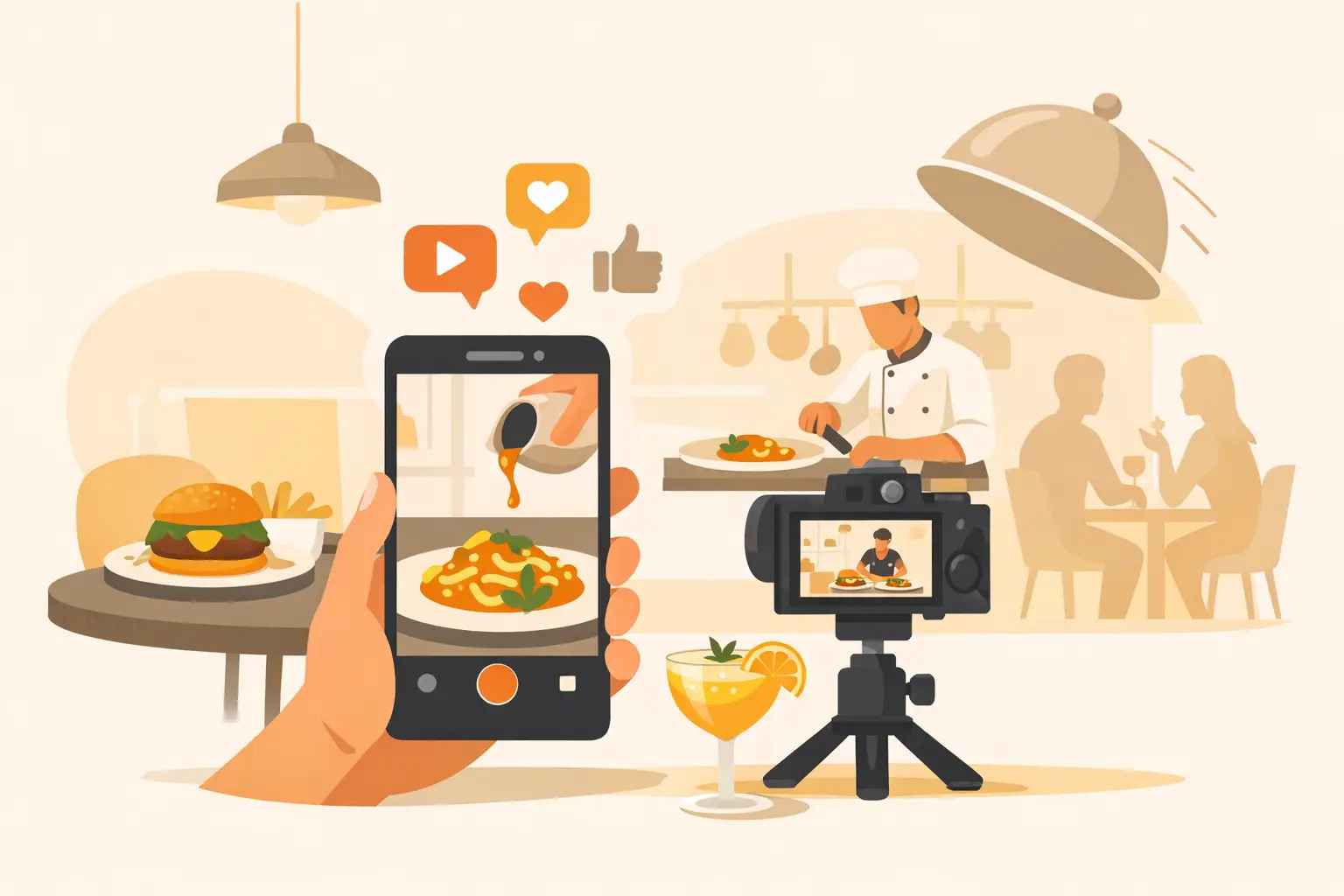
A full dining room is not the only sign that a restaurant is working. A Reel that makes someone stop scrolling, save the post, and send it to a friend can fill seats before service starts. The best restaurant reel content ideas turn the food, the process, and the offer into fast visual reasons to order - without requiring a new photo shoot every week.
For restaurant teams, the goal is not to chase every social trend. It is to build a repeatable content system that makes the menu look consistent, current, and worth trying. Use these ideas to create a production calendar that supports launches, daily traffic, catering, and delivery orders.
1. Show the First Bite Moment
The first bite is a simple but effective format because it answers the viewer's real question: what will this feel like to eat? Capture a fork breaking through a soft center, a sandwich pull-apart, a crisp crust, or a spoon moving through a layered dessert.
Keep the shot tight and lead with the most textural frame. A wide shot of the table can come later. For food that does not have a dramatic pull or break, use a slow spoon scoop, a clean slice, or a close-up of the finished plating.
2. Build a Dish in Three to Five Steps
Assembly Reels make familiar menu items look intentional. Start with the base, add the hero ingredient, show the finishing sauce or garnish, then end on the finished dish. This format works especially well for bowls, burgers, pizzas, tacos, salads, and drinks.
The trade-off is pacing. A full recipe process can feel slow in a short Reel, so show only the steps that create appetite or demonstrate quality. Skip repetitive prep and focus on color, movement, and the final payoff.
3. Make the Sizzle the Opening Frame
Heat creates immediate visual energy. A steak hitting a pan, vegetables on a grill, fajitas arriving at the table, or butter melting over a finished dish can earn attention in the first second.
Use natural kitchen sound when it is clean enough to support the clip. If the audio is chaotic, pair the visual with a relevant trending sound or simple music. The visual still needs to work with the sound off, so add a short on-screen line such as “Dinner plans, handled.”
4. Turn a Limited-Time Offer Into a Countdown
Seasonal dishes and limited-time offers need urgency, not just a menu description. Show the finished item first, then reveal the offer, dates, or availability. A Reel for a weekend brunch special, holiday dessert, game-day package, or new cocktail can be short because the decision window is short.
Avoid burying the date in a long caption. Place the key detail in the video and make the call to action direct: available Friday through Sunday, while supplies last, or order before 6 p.m.
5. Film the Menu Item Everyone Orders
Every restaurant has an anchor item: the plate guests photograph, the appetizer that starts tables, or the delivery item that drives repeat purchases. Give that item a recurring Reel series rather than treating it as a one-time post.
Vary the execution. One week can feature preparation, another can feature a close-up, and another can pair it with a drink or side. Repetition is useful when it builds recognition, but each post should have a distinct visual hook.
6. Use a Before-and-After Food Transformation
Transformation content makes prep feel valuable. Show a plain dough ball become a blistered pizza, raw ingredients become a finished ramen bowl, or a simple glass become a layered signature drink.
This is one of the best restaurant reel content ideas for concepts with a visible craft process. It also gives ghost kitchens and delivery-first brands a way to show quality without relying on dining room footage. If the raw stages are visually unappealing, shorten them and move quickly to the finished result.
7. Create a “What $15 Gets You” Reel
Price clarity can convert, especially for lunch offers, combo meals, family bundles, and value-forward concepts. Build the Reel around the complete order: entrée, side, drink, and any add-ons included in the price.
This format needs accuracy. Verify the price, location availability, taxes, and modifiers before posting. It is highly effective for driving action, but outdated promotional details can create unnecessary friction at the register or in online ordering.
8. Pair Food With the Right Occasion
People often choose restaurants based on a moment, not a cuisine category. Create Reels around occasions such as a quick work lunch, date-night dessert, late-night fries, a team catering order, or an easy family dinner.
The food should remain central, but the framing helps viewers picture themselves ordering. A text overlay like “Your 2 p.m. lunch break upgrade” is more useful than a generic claim that the meal is delicious. It gives the post a purpose in the customer’s day.
9. Let a Staff Member Make a Real Recommendation
Staff picks work when they sound specific. Instead of asking someone to name a favorite dish, have them explain the order: “Get the spicy chicken bowl, add avocado, and save room for the churros.”
This format adds a human layer without requiring a polished on-camera personality. Keep it brief and use captions. The strongest recommendations include a reason, such as a favorite sauce, a seasonal ingredient, or the best option for first-time guests.
10. Make a Drink Reel With Motion
Beverage content benefits from movement: a pour, a shake, carbonation, a garnish drop, condensation, or a final stir. It can support happy hour, zero-proof menus, coffee programs, and premium beverage upsells.
Lighting matters more than complexity here. Clear glassware, backlighting, and a clean background make color and texture visible. If you are generating or planning campaign visuals, maintain the same glassware, garnish style, and color treatment across the series so the menu looks recognizable.
11. Show the Delivery Order Arriving Right
Delivery content should reduce doubt. Show what arrives, how it is packaged, and how the food looks when opened. For pizza, fried food, bowls, desserts, and meal kits, this can be more convincing than a polished tabletop shot alone.
Be selective. A delivery Reel must show food that travels well and packaging that looks clean. If an item loses its visual appeal in transit, feature it as dine-in content instead, or adjust the packaging and presentation before putting it at the center of a campaign.
12. Create a Weekly Content Batch, Not One-Off Posts
The fastest teams do not start from zero for every Reel. They plan a weekly batch around menu priorities: one hero item, one offer, one beverage, one process clip, and one occasion-based post. That gives the team enough variation to stay active while keeping production focused.
For brands that need more volume, AI-generated food visuals can extend a real content library with campaign-ready scenes, menu variations, and animated food moments. Umami AI is built for this type of food-specific workflow, helping teams produce consistent visual assets without coordinating a full studio shoot for every post.
How to Keep Restaurant Reels Commercially Useful
A Reel can get views and still fail to drive business. Every post should have one job: promote a menu item, support a time-sensitive offer, increase order confidence, or strengthen visual recognition. Trying to sell a new dish, announce an event, introduce the chef, and explain the brand story in eight seconds usually weakens the result.
Use the first second for food, motion, or a clear promise. Keep on-screen copy readable and sparse. End with the dish name, offer, ordering cue, or location-specific action. Then review performance by more than views: saves, shares, profile visits, online orders, and comments asking about availability are stronger signals of commercial interest.
The most effective Reel is rarely the one with the biggest production budget. It is the one that makes the right customer hungry at the right moment, then makes the next step obvious.