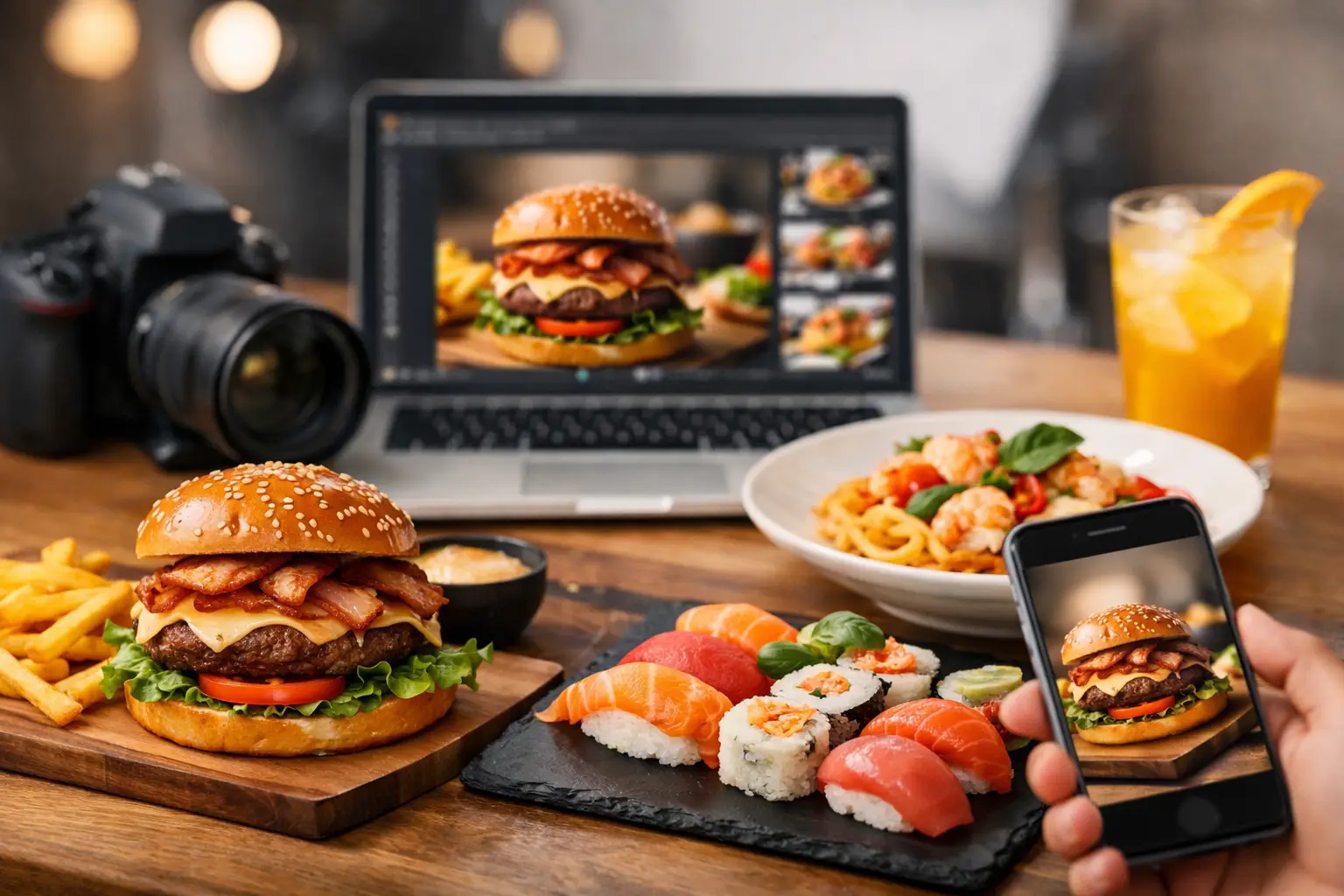
A seasonal menu goes live Friday, the promo calendar changed Tuesday, and the product shot you need still does not exist. That is the real use case for food image generation. It is not a novelty feature for experimenting with pretty pictures. For restaurants, food brands, agencies, and e-commerce teams, it is a production system for getting usable visuals on schedule.
The difference matters. When teams evaluate visual tools, they often compare AI output to a hero image from a full studio shoot. That is the wrong benchmark for most day-to-day work. A better question is whether the tool can produce appetizing, on-brand assets quickly enough to support the volume modern food marketing requires. In many cases, the answer is yes. In some cases, it depends on the asset type, the level of control needed, and how precise the brand standards are.
What food image generation is actually for
Food image generation is best understood as a commercial content workflow. It gives teams a faster way to create images for menu boards, paid social, delivery apps, product pages, email campaigns, web banners, and short-run promotions. Instead of booking a photographer, sourcing props, plating repeatedly, and waiting on edits, users can generate multiple directions in a short session and move straight into campaign production.
That speed changes planning. A restaurant group can test different seasonal dessert concepts before launch. A beverage brand can create variations for summer ads, retailer decks, and social posts without producing a full new shoot for each placement. An agency can deliver first-round visual options early, then refine the strongest concept instead of spending budget on comps that may never run.
This does not eliminate traditional photography. It narrows where photography is truly necessary. Packaging close-ups, exact product fidelity, or flagship campaign hero assets may still need a camera. But a large share of weekly content demand sits in the middle - good-looking, persuasive, channel-ready visuals that need to be produced quickly and consistently.
Why general AI tools often fall short on food image generation
Not all image generation performs equally well for food. Generic tools can create attractive scenes, but food is unusually sensitive to small errors. Texture, steam, garnish placement, sauce behavior, lighting warmth, portion realism, and plating balance all affect whether an image feels edible or synthetic.
That is where specialized food image generation has a practical advantage. A category-focused system is tuned for the visual language of meals, drinks, ingredients, and food styling. It is more likely to produce images that align with what marketers actually need: appetizing compositions, believable plating, clean backgrounds when required, and repeatable visual quality across a campaign.
For commercial teams, specificity is not a nice extra. It reduces revision cycles. If the tool understands the difference between a polished burger ad, a clean white-background product shot, and a lifestyle café scene, users spend less time fighting the model and more time producing assets.
The operational value is speed, volume, and consistency
The strongest case for food image generation is operational, not theoretical. Marketing teams rarely need one image. They need twenty versions for different sizes, formats, offers, audiences, and channels. They need fresh creative for recurring promotions. They need replacement assets when inventory changes or a campaign underperforms.
Traditional production struggles when the request volume is high and turnaround is short. Even small shoots involve coordination costs: scheduling, prep, ingredients, styling, retouching, approvals, and revisions. Those steps make sense for high-budget campaigns. They are less efficient for everyday visual demand.
AI-based workflows compress that cycle. A team can generate concepts, compare directions, approve one path, and produce multiple supporting assets in a single working session. That makes food image generation useful not only for designers, but also for operators and marketers who need output without adding production overhead.
Consistency is the other advantage. Once a team identifies a visual style that works - bright QSR product framing, premium dark-moody plating, clean e-commerce presentation, or social-first overhead compositions - it becomes easier to repeat that direction across multiple assets. That is especially valuable for multi-location brands, franchise groups, ghost kitchens, and agencies managing several accounts at once.
Where food image generation works best
The highest-value use cases are usually the least glamorous ones. Menu updates, weekly specials, app banners, ad variants, product launch support, marketplace imagery, and social content calendars all benefit from faster asset production. These are not one-off creative exercises. They are recurring production needs.
For restaurants, generated visuals can support new limited-time offers, in-store signage, catering promotions, and delivery platform refreshes. For CPG and beverage brands, they can fill gaps in campaign support, retailer content, paid media testing, and seasonal promotional work. For agencies, they can speed up concepting and reduce bottlenecks when clients need options fast.
Short-form motion also changes the equation. When image workflows connect to animation or video generation, a still asset can become a lightweight social ad or promotional loop without requiring a separate production process. For teams already working inside tight budgets, that matters.
The trade-offs to watch
Food image generation is strong, but not universal. The first trade-off is exactness. If the image must match a packaged product down to label alignment, ingredient count, or legal claim placement, generated output may need extra control or may not be the right choice at all.
The second trade-off is brand discipline. Fast generation can create visual volume, but volume without standards creates inconsistency. Teams still need to define composition style, color temperature, crop logic, and usage goals. The tool can accelerate production, but it does not replace brand direction.
The third is selection fatigue. Because generation is fast, users can overproduce options and slow themselves down in review. The fix is simple: create with placement in mind. A homepage hero has different requirements than a paid social square or third-party delivery thumbnail. When the intended channel is clear, output quality tends to improve and decision-making gets faster.
How to get better results from food image generation
The best workflows start with business intent, not prompts. Decide what the image needs to do. Is it meant to drive clicks on a promo, make a menu item look premium, support a product page, or fill a social content slot? Once that is clear, visual direction becomes easier to define.
Describe the food precisely. Broad requests produce broad results. Specificity around dish type, plating style, camera angle, environment, lighting, and mood gives the system more usable constraints. Commercial teams should also think in sets rather than singles. Generate several related options for one campaign so the final assets feel cohesive.
It also helps to separate concept creation from production output. In the first pass, test angles and styling directions. In the second, tighten around the strongest concept and generate variations sized to the real campaign need. That keeps the process efficient and reduces wasted credits or unnecessary iterations.
For businesses producing content regularly, a platform built around food-specific workflows is usually the better fit. Umami AI, for example, is designed around the actual production demands of food marketing: creating food visuals and short-form assets quickly, with credit-based usage that maps more cleanly to commercial output than open-ended experimentation.
Choosing a food image generation workflow that fits your team
A solo restaurant operator does not need the same setup as an agency or enterprise food brand. Smaller teams usually need speed and simplicity. They want to create assets without learning a complicated design stack. Larger teams care more about throughput, consistency, and enough capacity to support multiple campaigns at once.
That is why workflow structure matters as much as image quality. Credit-based systems can be practical when output demand is predictable and tied to campaign calendars. Subscription tiers also help teams match usage to business size instead of overcommitting to a production process they will not fully use.
The key question is not whether AI can create food images. It can. The real question is whether your current process can keep pace with the amount of visual content your channels require. If the answer is no, food image generation becomes less of a creative experiment and more of a sensible operating decision.
The teams getting the most value from it are not chasing novelty. They are reducing turnaround time, expanding creative coverage, and producing more usable assets with less friction. When the workflow is specific to food, the output tends to be more commercially relevant from the start.
The practical advantage is simple: when demand for fresh visuals keeps rising, the teams that can create faster without lowering standards have a clear edge.