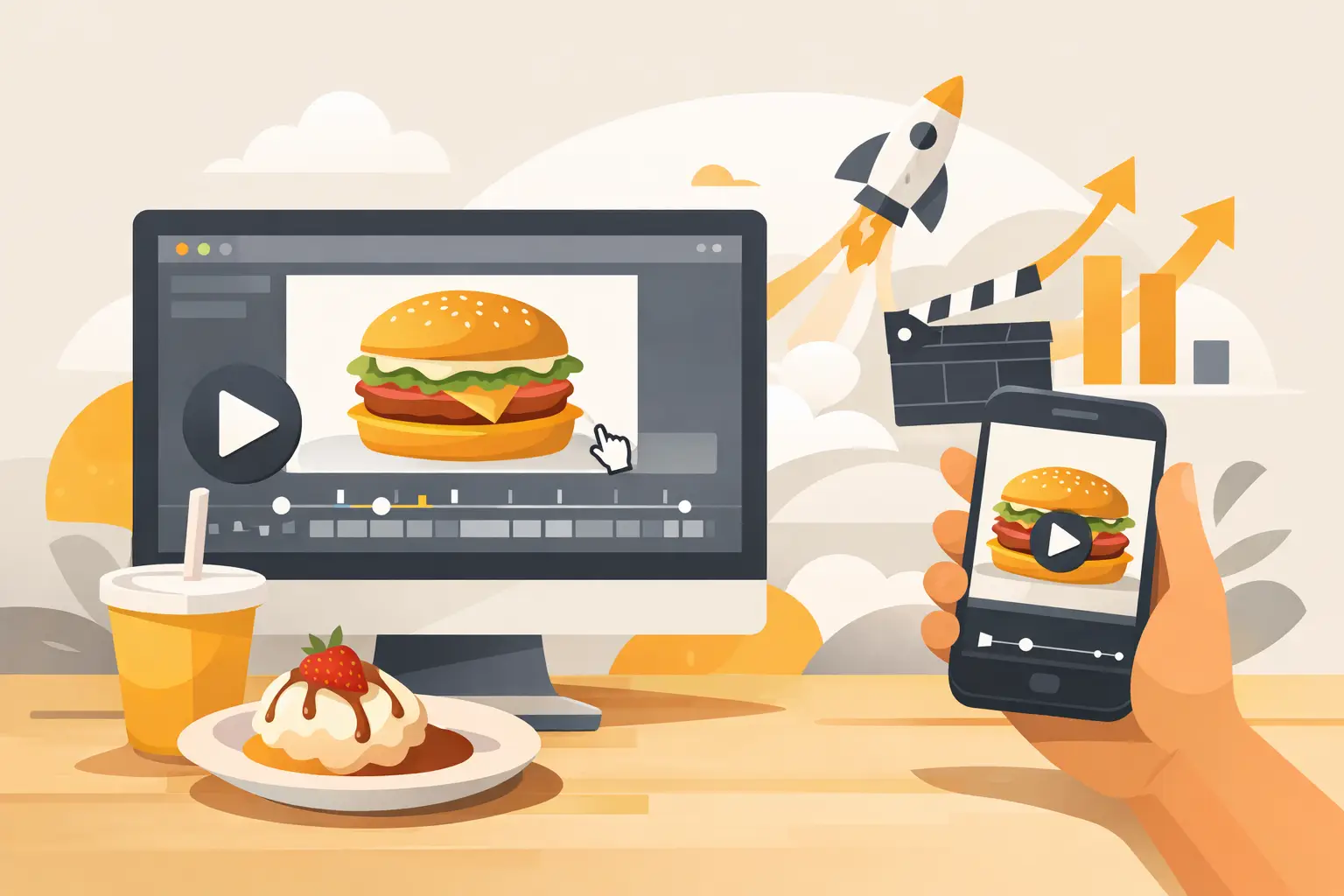
A still product image has one job: show what is for sale. Food product animation can do more in the same amount of screen space. It can show a sauce pouring, carbonation rising, cheese stretching, a package rotating, or a frozen dessert catching light before the viewer scrolls past.
For food brands, restaurants, delivery concepts, and e-commerce teams, that movement is not decoration. It is a practical way to make texture, freshness, portion size, and product benefits easier to understand. The right animated asset can give a campaign more stopping power without requiring a new studio shoot for every promotion, flavor launch, or channel format.
What Food Product Animation Is Built to Do
Food product animation is short-form visual content that brings a dish, ingredient, package, or serving moment into motion. It may be a subtle loop for a product page, a vertical social clip, a paid ad, a digital menu asset, or a motion-forward hero visual for a launch campaign.
The strongest animations usually focus on one clear sensory cue. A chip breaks. A glaze falls. Steam rises. Condensation forms on a beverage can. These moments work because they communicate qualities that static photography can only suggest.
For commercial teams, the format also solves a production problem. A traditional motion shoot requires a set, crew, food stylist, equipment, retouching, editing, and a schedule that can easily extend beyond the campaign window. Animation workflows make it possible to produce more variations when the product, season, offer, or audience changes.
That does not mean every asset should move. A clean pack shot may perform better as a still on a crowded product grid, while a short motion asset can be more effective as the first frame of a social ad. The decision depends on placement, viewing time, and the action you need the audience to take.
Where Animated Food Content Performs Best
Animation earns its place when motion adds information or appetite appeal. A sparkling water brand can use moving bubbles to signal refreshment. A bakery can use a brief pull-apart moment to show softness. A meal kit can animate ingredients coming together to make preparation feel simple.
For paid social, the first second matters. A direct visual action gives a viewer a reason to pause before reading the offer or product message. Start with the product already in motion rather than building slowly toward the reveal. On fast-moving feeds, a delayed payoff often loses attention.
On e-commerce pages, small loops can answer purchase questions that customers may have when they cannot touch the product. Is the sauce thick or thin? Is the package resealable? How large is the serving? How does the beverage pour over ice? Motion can reduce ambiguity, provided it stays focused and does not distract from price, nutrition information, or the add-to-cart path.
Restaurants and ghost kitchens can use animated visuals to refresh delivery listings, digital menus, and limited-time offer campaigns. The operational advantage is significant: a new offer does not always need a full reshoot to look campaign-ready. Agencies benefit in a similar way, especially when managing multiple clients that need distinct visual directions, frequent revisions, and platform-specific crops.
Start With a Commercial Brief, Not an Effect
The fastest way to waste production time is to begin with a visual effect instead of a business objective. Before generating or commissioning an animation, define what the asset needs to sell.
A useful brief includes the product, audience, placement, message, format, and intended action. For example: introduce a new spicy ramen bowl to lunch customers on vertical social video, highlight the rich broth and visible toppings, and drive orders during a two-week launch window. That is more actionable than asking for a dramatic food video.
Then choose one hero moment. Trying to show packaging, ingredients, preparation, serving, flavor, and an offer in a six-second clip usually creates visual noise. A better approach is to make one claim visible. For a protein bar, that may be the layered interior. For a cold brew, it may be ice, pour, and condensation. For a snack brand, it may be the crunch.
Keep brand cues present but controlled. Packaging, color palette, serving ware, background treatment, and typography should feel consistent with the rest of the campaign. If the product is recognizable only after the final frame, the animation may generate views without building recall.
Build for the channel first
The same creative idea should not simply be resized for every placement. Vertical video needs a centered focal point and room for interface overlays. A website hero can support slower, more atmospheric movement. Product page loops should be lightweight and easy to understand without sound.
Plan the crop and safe areas before production. In food visuals, the most appetizing detail is often near the edge of the frame: a dripping sauce, lifted fork, or stacked garnish. If that detail disappears in a vertical crop, the asset loses its primary value.
Also consider duration. A loop of two to four seconds can work well for product pages and display placements. Social ads may need six to ten seconds to establish product, message, and call to action. Longer is not automatically better. If the product benefit is clear in three seconds, use three seconds.
Use AI to Expand Variations, Not Lower Standards
AI-powered food animation changes the economics of visual production. Instead of reserving motion for major launches, teams can test multiple concepts for offers, seasonal campaigns, regional promotions, and audience segments. That flexibility is especially useful for brands with large catalogs or frequent menu changes.
The practical advantage is variation. You can explore different backgrounds, serving scenarios, visual moods, camera movement, and motion intensity before committing budget to a final set of assets. A beverage brand might test clean studio ice, a bright poolside scene, and a late-night convenience-store direction to see which version best fits a campaign audience.
But speed does not remove the need for review. Food is unusually sensitive to visual errors because people recognize it immediately. Watch for unrealistic ingredients, distorted labels, incorrect portions, awkward utensil movement, impossible liquid behavior, and claims the product cannot support. If a package, recipe, or regulated label must be exact, treat it as a controlled brand element and inspect it closely.
Umami AI is designed around this category-specific need: producing food-focused image and video assets without forcing teams to adapt general-purpose visual tools to products people expect to look real, appetizing, and on-brand.
Protect product truth
Appetite appeal should not turn into misrepresentation. If the animation shows a product with extra toppings, a larger serving, or a preparation method customers will not receive, it can create disappointment rather than demand. This is especially relevant for restaurant delivery brands, packaged foods, and products with nutrition or dietary claims.
Use animation to clarify the best truthful version of the product. Show the actual package. Match the approved flavor profile and ingredients. Keep promotional text legible. When an asset is intended for paid media, have brand, legal, and performance stakeholders review it before it scales.
A Production Workflow That Keeps Volume Manageable
High-volume content works best when teams separate ideation from approval. First, establish a small set of visual territories: clean product studio, indulgent close-up, ingredient-led freshness, or lifestyle serving occasion. Then create motion tests within each territory.
Once a direction is selected, standardize the parts that should not change. Define background colors, lighting character, camera angle, product scale, prop rules, and motion pace. This gives designers and marketers a repeatable system rather than a collection of unrelated clips.
Build a source library around top products and common campaign moments. A restaurant may need lunch, late-night, game day, and seasonal offer variants. A CPG brand may need product launches, retailer promotions, recipe content, and subscription campaigns. Organizing these use cases in advance makes credit usage, approvals, and revision cycles easier to manage.
Measure creative performance with a clear purpose. For paid social, compare thumb-stop rate, video completion, click-through rate, and conversion rate against still-image controls. For product pages, track add-to-cart activity, time on page, and conversion by asset type. A visually impressive animation that does not improve a commercial metric may still be useful for brand building, but it should not automatically become the template for every campaign.
Make Motion a Repeatable Content Advantage
Food animation works best when it is part of a content system, not a one-off experiment. Use it for the moments where movement proves freshness, texture, convenience, or indulgence faster than a static image can. Keep the hero action simple, the product recognizable, and the format matched to the channel.
Start with one product and one high-value placement, then compare the result against your current creative. The goal is not to animate everything. It is to give the right products more appetite appeal, more testing capacity, and a faster path from campaign idea to usable visual asset.