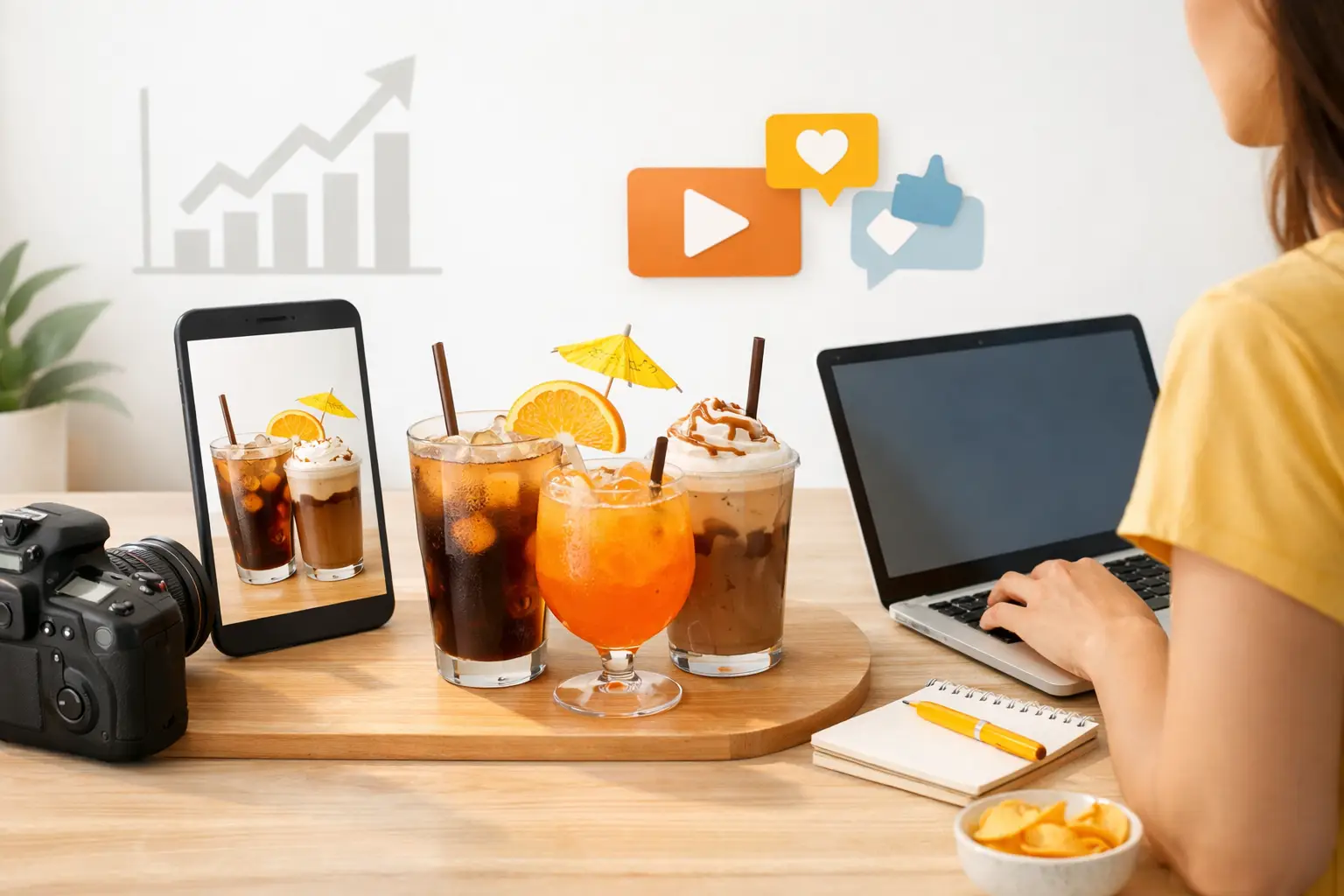
A cold drink can look flat, diluted, or forgettable in seconds. The difference between a beverage image that stops a scroll and one that gets ignored is rarely the bottle alone. It is the condensation, the pour, the lighting, the setting, and a message that gives people a reason to act. Learning how to create beverage ads means building those details into a repeatable production system, not hoping a single attractive image will carry the campaign.
For restaurants, CPG brands, ghost kitchens, and agencies, the goal is simple: produce polished beverage creative quickly enough to support promos, launches, seasonal moments, and everyday sales channels. Here is a practical framework for making ads that look premium and work harder.
Start With One Commercial Job
Every beverage ad should have one primary job. A new canned cocktail may need awareness. A limited-time iced latte may need orders before 2 p.m. A sparkling water campaign may need to establish a cleaner, more premium position against familiar competitors.
Trying to solve all three in one asset usually produces vague creative. Before selecting a visual direction, define the action you want from the viewer: order now, add to cart, visit a location, try a new flavor, or remember the brand.
That decision affects the entire ad. A direct-response delivery ad needs an obvious product, price or offer, and a readable call to action. A brand-building ad can spend more space on atmosphere, texture, and recognizable visual cues. Both can perform, but they should not be designed the same way.
Build the Drink Around a Clear Visual Hierarchy
Beverages are visually sensitive products. Small production choices can make a drink feel crisp and refreshing or warm and artificial. The product needs to read immediately, especially on mobile screens where viewers may see it for less than a second.
Place the drink first in the hierarchy. Make the label, garnish, foam, ice, or signature color easy to recognize. Then use the environment to reinforce the occasion. A bright citrus spritz works well with sunlit patio energy. A dark espresso drink can support a more focused, early-morning or late-night mood. The setting should add context without competing with the product.
For most ads, avoid filling the frame with every available ingredient, prop, and piece of text. A crowded scene makes the drink harder to identify. One hero beverage, a complementary background, and one supporting cue such as a sliced lime, a pastry, or a hand reaching for the glass is often enough.
Use sensory details viewers can almost feel
The strongest beverage creative translates taste into visible signals. Condensation implies cold. Tiny bubbles suggest carbonation. A glossy pour creates movement. A clean layer of crema signals freshness in coffee. These cues are not decoration. They help viewers understand the product before they read the copy.
Accuracy still matters. If a product is shelf-stable, low sugar, alcoholic, nonalcoholic, or made with a specific ingredient, make sure the creative and claims match the real product. An appealing visual can earn attention, but misleading presentation can damage trust and create compliance problems.
Create Beverage Ads for the Placement First
A good ad is not one image resized five times. Each placement has different viewing behavior, text limits, and safe areas.
For vertical Stories, Reels, and short-form video, lead with motion or a tight product reveal. A can opening, liquid pouring over ice, or a glass entering frame gives the asset an immediate start. Keep key text away from interface areas, and make the product recognizable before the first second is over.
For social feed ads, a strong static hero can still perform well, particularly for a product launch or local offer. Prioritize a clean composition and enough contrast for the package to stand out. For display, delivery marketplaces, and ecommerce listings, clarity generally beats mood. Use a product-forward image and keep promotional information easy to scan.
The trade-off is straightforward: highly styled creative may build desire, while simpler creative may communicate the offer faster. Produce both. Use the polished lifestyle visual as the attention asset, then pair it with product and offer variants that make conversion easier.
Write Copy That Adds a Reason to Buy
Your image creates the craving. Your copy should remove hesitation.
Start with the most relevant benefit, not a generic adjective. “New peach green tea, iced to order” communicates more than “Taste the refreshment.” “2 for $8 after 3 p.m.” gives a clear reason to visit. “Zero sugar, full citrus flavor” can work for a functional or better-for-you product when it is factually supported.
Keep the headline short enough to read without pausing. Use the caption or supporting text for flavor notes, product details, availability, or conditions. The call to action should match the campaign objective: Order now, Shop flavors, Find a location, or Try the new seasonal menu.
If the brand voice is playful, the copy can have personality. But the viewer should still understand what the drink is and what to do next. Cleverness is only useful when it does not slow down comprehension.
Use a Repeatable Production Workflow
Traditional beverage shoots can be effective, especially when exact packaging, legal review, or hero campaign photography requires full control. They also require scheduling, props, styling, retouching, and reshoots when a flavor, offer, or label changes.
For ongoing campaign production, a system is more valuable than a one-off shoot. Create a small set of reusable visual directions: clean studio product, bright outdoor refreshment, premium evening serve, close-up texture, and lifestyle occasion. Each direction can generate multiple creative variants without losing the brand’s visual identity.
This is where food-specific AI production can reduce turnaround time. Umami AI can help teams generate beverage visuals and short-form concepts around a defined product mood, composition, and campaign setting, without organizing a new shoot for every social post or promotion. The best workflow still includes review: verify packaging, ingredients, proportions, and any claims before publishing.
Give every concept a production brief
A usable creative brief does not need to be long. It needs to be specific. Define the beverage type, package or glassware, key flavor cue, audience, setting, lighting, color palette, placement, and desired action.
For example, “A 16-ounce iced matcha latte with visible ice and a creamy green gradient, photographed in a bright modern cafe, vertical format, product centered in the lower middle, room for a four-word offer at the top” is actionable. “Make a matcha ad” is not.
Specific direction produces more consistent output and makes it easier to generate variants. Change one variable at a time: the flavor cue, the background color, the offer, the crop, or the time of day. This helps the team learn what actually improves performance.
Test Creative Variables, Not Random Ideas
A beverage ad can fail for several reasons: the product is too small, the offer is unclear, the background lacks contrast, or the audience does not connect with the occasion. Testing helps isolate the cause.
Run structured tests with a stable audience and one meaningful creative change. Compare a bottle close-up against a lifestyle scene. Test a price-led headline against a flavor-led headline. Try a pour video against a static product image. Track the metric that matches the job: thumb-stop rate and video completion for awareness, click-through rate for traffic, and cost per order or return on ad spend for conversion.
Do not declare a winner only because it received more likes. Engagement can be useful, but it does not automatically translate into sales. A less flashy product-forward ad may be the asset that drives the most checkout activity.
Keep Brand Consistency Without Repeating the Same Ad
Volume should not create visual drift. Set non-negotiables for packaging presentation, logo placement, core colors, photography style, and approved product claims. Then leave room for campaign-level variation in setting, seasonal ingredients, talent, motion, and copy.
This balance matters most for brands producing weekly content. Repeating the same composition creates fatigue, while changing everything at once makes the brand harder to recognize. A recognizable visual system lets customers identify the beverage before they read the logo.
The next beverage campaign does not need a bigger shoot or a broader concept. It needs one clear offer, a drink that looks worth reaching for, and enough well-produced variants to find the creative that earns the order.