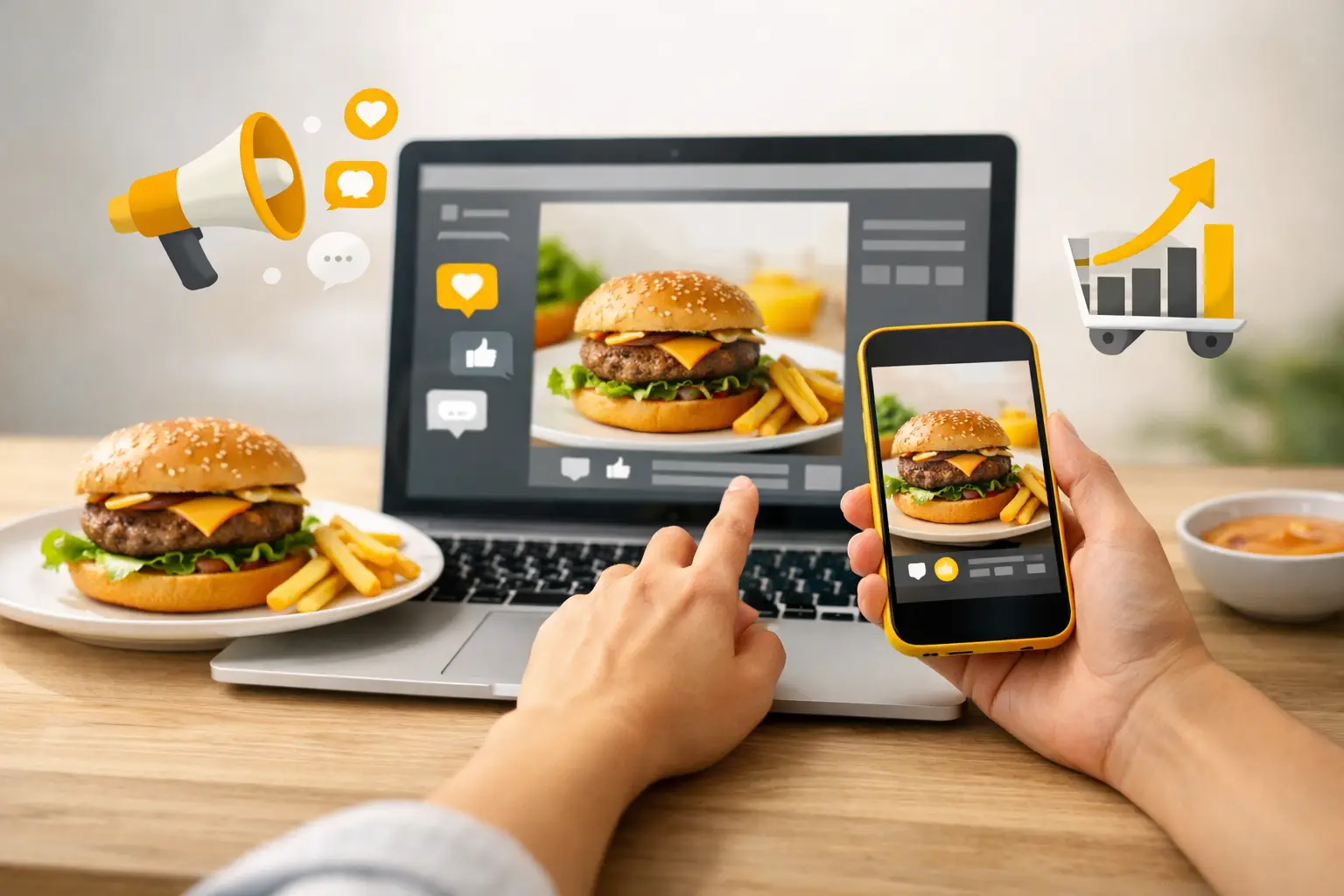
A food ad gets a fraction of a second to make someone hungry. If the product looks flat, the offer is unclear, or the format feels wrong for the placement, that moment is gone. Learning how to create food ads means building a repeatable system that pairs craveable visuals with a direct commercial message - not simply posting a pretty plate.
For restaurants, packaged food brands, ghost kitchens, and delivery-first operators, the goal is usually specific: sell a featured item, increase orders during a slow daypart, introduce a product, or keep the brand visible between promotions. The best creative makes that next action obvious.
Start with one job for every ad
Do not ask a single food ad to build awareness, explain the entire menu, announce a discount, and collect an order. Choose its primary job before choosing the image.
A launch ad can create curiosity around a new burger, beverage, or seasonal flavor. A conversion ad should put the product, price or incentive, and ordering path front and center. A retargeting ad can assume the customer already knows the brand and focus on a reason to come back, such as limited availability, a bundle, or free delivery.
This decision changes the creative. A brand-awareness ad may use a distinctive scene and minimal copy. A delivery promotion needs a tighter crop, legible offer text, and less visual ambiguity. When the objective is clear, creative teams can judge the result against a business outcome instead of personal taste.
Build the visual around appetite, not decoration
Food advertising is sensory, even on a screen. Viewers should be able to read texture immediately: melted cheese, condensation on a cold drink, crisp edges on fried food, a glossy sauce, or steam rising from a hot bowl. These cues signal freshness and make the product feel more tangible.
Use a composition that gives the hero item room to work. For a single-item promotion, a close crop often outperforms a wide table scene because it lets the food fill the frame. For a bundle or meal deal, an overhead composition can show quantity and variety without becoming cluttered. Packaging should appear when recognition matters, especially for retail products, but it should not hide the food itself.
Lighting and color need to support the actual product. Warm tones generally work well for baked goods, pizza, grilled food, and comfort dishes. Bright, clean lighting may be a better fit for salads, functional beverages, and fresh grocery products. There is no universal food-ad aesthetic. The right treatment depends on the category, price point, and audience expectation.
Accuracy still matters. If the ad shows an exaggerated portion, a topping that is not included, or a product that looks nothing like what customers receive, it may generate clicks but damage trust. Use appetite appeal to make the real offer look its best, not to invent a different one.
How to create food ads for each placement
The same asset rarely works everywhere. A feed ad can hold more context than a vertical story, while a website banner needs to communicate at a glance. Create the core visual first, then produce channel-specific variations rather than cropping one image until it breaks.
For most campaigns, plan for these distinct needs:
- Vertical 9:16 creative for Stories, Reels, and short-form video placements, with the hero food visible in the first second.
- Square or 4:5 creative for social feeds, where product scale and clear copy matter more than a complex scene.
- Wide creative for display, web headers, and delivery marketplace promotions, usually with protected space for a headline or offer.
- Short video loops that add motion to a simple food moment, such as a sauce pour, a garnish drop, a can opening, or a slow push toward the dish.
Keep text away from interface areas and make the product recognizable before a viewer has time to read. On mobile, small typography, long ingredient lists, and crowded badges become visual noise. If the offer needs explanation, use the ad to earn attention and let the landing page, menu, or product page carry the details.
Write copy that gives the image a commercial purpose
Food visuals create desire. Copy gives that desire direction. The strongest headlines usually name the item, the benefit, or the immediate reason to buy. “New hot honey chicken sandwich” is more useful than “Taste the difference.” “Two bowls for $20 tonight” is more useful than “Dinner solved.”
Keep the language concrete. Mention the flavor, format, price point, availability window, or customer benefit that makes the offer distinct. If a promotion has conditions, present the essential limitation clearly enough that customers do not feel misled after clicking.
A simple structure works across many ad types: lead with the product or offer, reinforce it with one supporting detail, then use a direct call to action. “Cold brew with vanilla cream. Available all week. Order ahead.” The right call to action depends on the destination: Order Now, View Menu, Shop the Drop, Find a Store, or Get Delivery.
Produce variations before you need them
One polished asset is not a campaign. Ad performance changes with audiences, placements, frequency, and seasonality. Build a small bank of purposeful variations from the start so you can test without remaking the campaign under pressure.
Change one meaningful variable at a time. Test a close-up against an overhead shot, a product-only frame against a lifestyle setting, a price-led headline against a flavor-led headline, or a static image against a short motion asset. If everything changes at once, you will not know what caused the result.
This is where a food-specific creation workflow has an operational advantage. Tools such as Umami AI can help teams generate and adapt commercial food visuals without scheduling a new shoot for every flavor, promotion, crop, or seasonal concept. The practical value is not generating more images for their own sake. It is creating enough usable, on-brand options to keep testing and publishing on schedule.
Maintain a visual brief for every product line. Define camera angle, background style, color palette, prop limits, packaging rules, and acceptable text space. A burger campaign and a premium bottled sauce campaign may both be appetizing, but they should not necessarily look like they came from the same ad template.
Measure the signal that matches the goal
Click-through rate can tell you whether the creative earned attention, but it is not the final answer for an order-focused campaign. Track the event closest to revenue that your setup can reliably measure: menu views, add-to-carts, online orders, coupon redemptions, product-page conversion, or return on ad spend.
Creative evaluation also depends on the buying cycle. A limited lunch special may show results quickly. A new retail food product may require repeated exposure before a shopper acts. Compare ads within comparable audiences, budgets, and time periods before declaring a winner.
Watch for fatigue. When frequency rises and response falls, refresh the hook, the crop, the featured item, or the offer. You do not always need a new campaign concept. A fresh hero image or a different opening second can restore attention while preserving what already works.
Keep the workflow fast enough to match the menu
Food promotions move quickly. A seasonal flavor, a weather-driven delivery push, or a surplus-inventory offer cannot wait weeks for a full production cycle. Build an approval process that separates brand-critical checks from minor preferences. Confirm product accuracy, pricing, legal requirements, and visual consistency, then publish.
The most effective food ads are clear before they are clever. Show the item people can buy, make it look worth wanting, state why now, and deliver it in the format where the customer will see it. When that system is in place, every new menu item becomes a campaign opportunity instead of a production bottleneck.