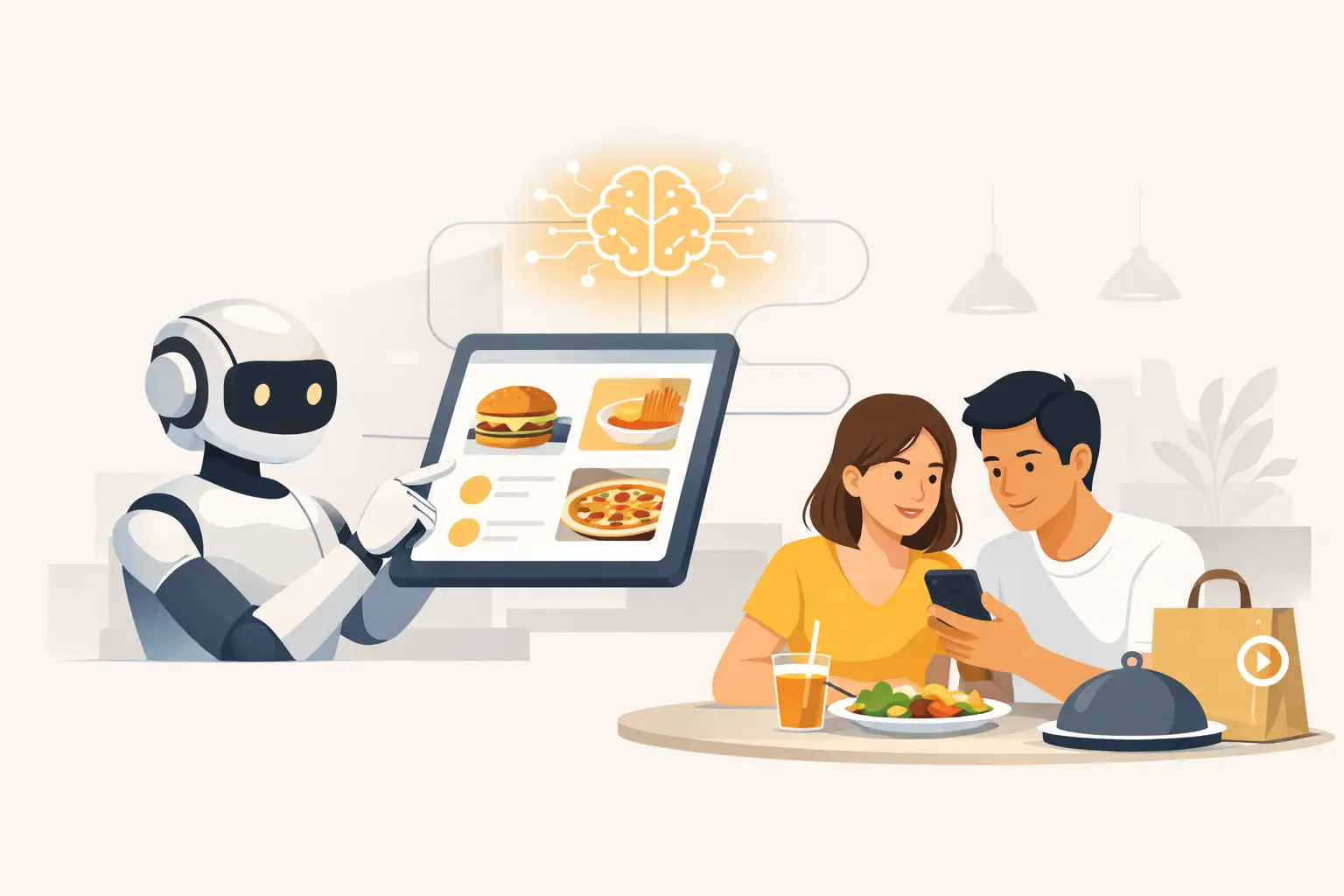
A new seasonal sandwich should not have to wait two weeks for a photographer, a studio booking, prop sourcing, retouching, and final exports. For restaurants that update menus often or need fresh social content every week, restaurant AI visuals create a faster production path: campaign-ready food images and short-form motion built around the dish, the channel, and the offer.
The value is not simply generating more images. It is producing the right visual for the moment: a clean delivery-app hero, a close-up that makes a limited-time dessert feel urgent, or a vertical social asset that gives a lunch special a reason to stop the scroll. Used well, AI reduces production friction while giving marketing teams more room to test, refine, and publish.
Where restaurant AI visuals make the biggest impact
Restaurants rarely need one perfect photo. They need a repeatable supply of visuals across menus, websites, email, paid media, third-party ordering platforms, and social channels. Traditional food photography remains valuable for flagship brand work, but it can be too slow and expensive for every weekly promotion, market-specific variation, or menu test.
AI visual production is especially effective when the goal is speed, variation, or volume. A ghost kitchen can create distinct creative directions for multiple virtual concepts. A regional chain can adapt a burger launch for lunch, late night, and game-day promotions. A social manager can develop a full month of content from a small set of menu priorities instead of stretching one photo shoot across every post.
It also helps when an item is difficult to photograph on demand. Seasonal ingredients may not be available, a product may still be in development, or a campaign may need to launch before every location has final packaging. In those cases, visual concepts can move ahead while operations finalize the details.
The trade-off is accuracy. If an image represents a specific menu item, it must match what guests can realistically expect to receive. AI is a production tool, not permission to invent portion sizes, ingredients, or plating that the restaurant cannot deliver.
Start with the commercial job, not the prompt
The fastest way to get weak output is to ask for a generic “beautiful food photo.” That instruction has no audience, placement, or conversion goal. Strong food creative starts with a clear brief, even when the final image is generated in minutes.
Define the item, the offer, and the channel first. A menu header needs readable negative space and a direct view of the product. A paid social ad may need a high-contrast composition that works with text overlay. An Instagram Story needs vertical framing, motion potential, and a visual hierarchy that reads instantly on a phone.
Then set the appetite cues. Describe the food’s texture, temperature, light, angle, and context with purpose. For a crispy chicken sandwich, that may mean a tight three-quarter angle, visible crunch, soft warm light, and a shallow depth of field that keeps the sandwich as the clear focal point. For an iced beverage, condensation, translucent ice, backlighting, and a clean color field may matter more than a styled tabletop scene.
Brand cues belong in the brief as well. Specify the color palette, energy level, camera style, background treatment, props, and amount of whitespace. The more consistently these decisions are applied, the less every campaign feels like it came from a different restaurant.
Build reusable visual recipes
A one-off prompt can produce a useful image. A reusable recipe produces a system. Save the language, composition preferences, approved styling references, and aspect ratios that reliably fit your brand. Treat these as practical production standards, not creative constraints.
For example, a fast-casual brand may use bright natural light, bold solid-color backgrounds, minimal props, and overhead or three-quarter product shots. A premium steakhouse may prefer deeper tones, restrained garnish, editorial side lighting, and more negative space. Neither direction is inherently better. What matters is that a guest can recognize the brand before reading the logo.
This approach also makes delegation easier. An owner, marketer, agency partner, or in-house designer can work from the same visual rules and generate assets that feel connected.
Produce for the placements that need content most
A restaurant marketing calendar contains more asset needs than most teams can photograph. The practical move is to prioritize placements where fresh visuals influence attention, clicks, or ordering decisions.
Menu and ordering visuals should make the product easy to understand at a glance. Avoid crowded scenes when the guest needs to identify ingredients, size, and format. For delivery and pickup promotions, the food should remain the hero, with packaging and service cues used only when they support the offer.
For social, build content in sets rather than isolated posts. One entrée can become a clean product reveal, a detail shot of texture, a lifestyle composition, a limited-time-offer graphic, and a short animated sequence. Each asset has a different job, but the group provides enough variation to prevent the feed from looking repetitive.
Paid ads benefit from controlled testing. Generate multiple compositions around the same offer, then test different backgrounds, crops, text-safe areas, and product angles. Keep the offer and brand treatment stable while changing one visual variable at a time. That makes performance results more useful than simply rotating random images.
Short-form video deserves the same planning. A subtle push-in toward a plated dish, rising steam, a beverage pour, or a layered assembly can give a campaign motion without the cost of a full food video shoot. Keep it brief and legible. The goal is to amplify appetite appeal, not bury the product in effects.
Keep food believable and brand-safe
Food imagery is persuasive because it creates an expectation. That makes quality control a core part of the workflow. Before publishing, review every visual for product accuracy, ingredient consistency, odd textures, unrealistic utensils, broken packaging, and confusing portions. Small errors can make a polished image feel artificial fast.
Be especially careful with branded elements. Logos, packaging, labels, and proprietary marks should be reviewed closely. If a campaign includes claims such as “plant-based,” “gluten-free,” “spicy,” or a specific price, the visual team should work from approved language and current operational details. The image may be generated quickly, but the offer still needs the same marketing and legal review as any other commercial asset.
A useful operating rule is simple: use AI to improve presentation and speed, not to misrepresent the product. If the image is concept work or mood-based creative, there is more flexibility. If it appears on a menu, ordering page, or product-specific ad, fidelity matters more.
Make the workflow faster without lowering the bar
The best process separates exploration from production. In exploration, generate a range of visual directions quickly. Decide which compositions, lighting styles, and backgrounds best fit the campaign. In production, narrow the choices, create channel-specific versions, and run a focused approval check.
This structure prevents teams from endlessly generating options without a decision framework. It also keeps credit use disciplined. Spend early iterations on finding the right creative direction, then use approved recipes to create the needed crop, variation, and animation set.
Umami AI is designed for this food-specific workflow, helping teams create images, compose scenes, and develop motion assets without relying on a general-purpose visual tool for every request. The practical advantage is not novelty. It is getting more usable food content into the campaign pipeline with less setup.
Track results after publishing. Compare click-through rate, saves, engagement, menu-item sales, and conversion by creative type when data is available. Over time, a restaurant can learn whether close crops outperform wide tablescapes, whether motion improves offer awareness, or whether a certain color treatment consistently drives stronger response.
A better content cadence for restaurant teams
Restaurant AI visuals work best when they support a real publishing cadence. Plan around menu launches, local events, seasonal moments, dayparts, and recurring promotional needs. Then build a small library of approved visual recipes and asset types that can be refreshed as offers change.
The result is a more responsive marketing operation. Instead of treating every new dish or promotion as a production event, teams can create, review, and deploy visual content at the speed restaurant marketing actually demands. The strongest image is not always the most elaborate one. It is the one that makes the right guest hungry enough to act.