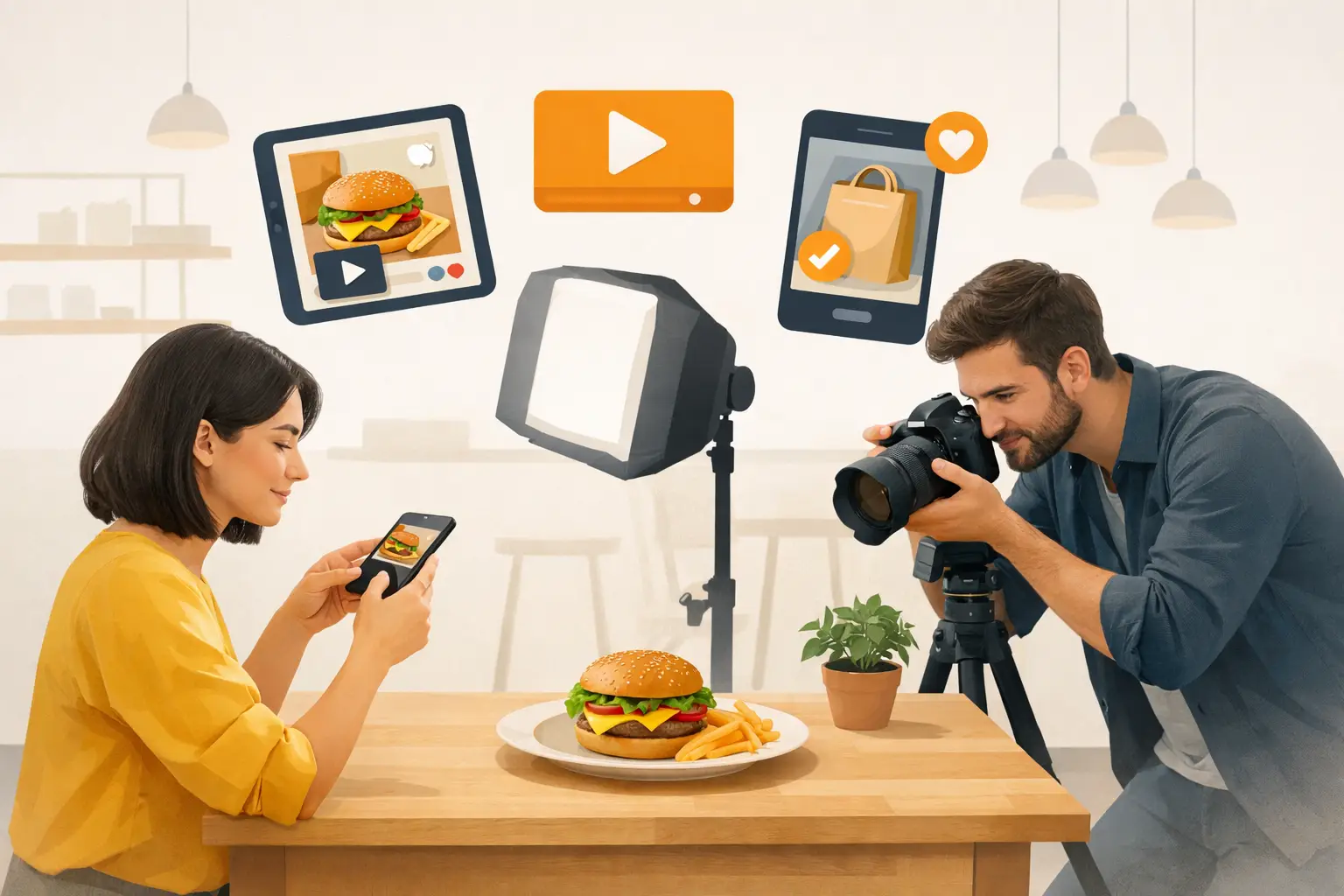
A new seasonal entrée can be ready for service by Friday. The photo shoot, retouching, approvals, and social rollout often are not. That gap costs restaurants more than speed: it leaves paid campaigns running with tired images, delivery listings without appetite appeal, and launches without enough visual material to earn attention.
Restaurant content creation should operate like a production system, not a one-off creative project. The goal is to create persuasive, on-brand visual assets for every sales surface without booking a studio every time the menu changes. For restaurant teams, the practical question is not whether content matters. It is how to produce enough of the right content without turning marketing into a bottleneck.
What Restaurant Content Creation Needs to Produce
A single hero image is useful, but it rarely covers the full commercial need. A restaurant may need a wide image for its website, a vertical video for a social ad, a clean menu visual, a delivery-platform crop, and several variations for an offer. Each asset has a different job, even when it features the same dish.
The strongest content systems start with a clear asset map tied to revenue activity. That usually includes menu updates, limited-time offers, catering, delivery, loyalty promotions, new-location announcements, and day-to-day social publishing. When teams define these needs before creating visuals, they avoid producing attractive images with no usable placement.
For a restaurant with frequent promotions, four asset groups typically deserve priority:
- Product-first images that make a specific dish, drink, bundle, or dessert easy to understand at a glance.
- Lifestyle or occasion visuals for campaigns such as game day, lunch, weekend brunch, or holiday ordering.
- Conversion assets sized for menu pages, delivery apps, email headers, display ads, and promotional landing pages.
- Short-form motion content that gives social feeds and paid placements more movement than a static image alone.
This does not mean every menu item needs a full campaign. High-margin products, limited-time offers, and products that are difficult to explain are usually the best places to invest first. A familiar side dish may need a simple menu image. A new loaded bowl or premium cocktail may need multiple angles, formats, and ad variations.
Build a Visual System Before You Create Volume
Content volume only works when it is consistent. If every image uses a different lighting style, table setting, camera angle, or level of polish, the restaurant can look disorganized even when individual assets are strong. Customers may not describe the problem that way, but they feel the difference between a coherent brand and a random feed.
Start by setting a visual brief that can be reused. Define the food category, plating style, color palette, backgrounds, props, lighting direction, framing, and level of realism. A fast-casual bowl brand might favor bright overhead compositions, crisp ingredients, and simple surfaces. A steakhouse may need darker tones, tighter crops, and more deliberate atmosphere. Neither approach is universally better. It depends on the brand promise, price point, and where the image will appear.
The brief should also account for operational reality. If a dish is served in a branded bowl, package, or glass, that element should be treated as a non-negotiable visual cue. If the kitchen presentation varies by location, it may be smarter to use a controlled campaign image for advertising while reserving real service photography for behind-the-scenes social posts. Trying to make every asset do both jobs can create inconsistency.
Create a small library of approved visual directions rather than one fixed template. Three to five repeatable looks give a team range without losing recognition. For example, a brand can use a clean product shot for menu conversion, a warm tabletop scene for email, and a high-energy vertical composition for social ads. The dish remains recognizable while the context changes for the channel.
Match the Content to the Customer Decision
Most restaurant content fails because it is designed for internal approval instead of customer action. The question should be: what does this visual need the customer to do next?
Menu and delivery imagery needs clarity. Show the full product, make portions legible, and minimize props that obscure ingredients. A dramatic crop may look great in a campaign, but it can underperform when a guest is deciding whether a $17 entrée includes protein, sides, or toppings.
Social content has more room for personality. A close-up cheese pull, a drink pour, or a quick animation can earn attention in a crowded feed. But attention alone is not enough. Tie the post to a product, a location, a limited window, or an offer. Otherwise, the content can generate likes without helping the business move inventory.
Paid advertising benefits from variation. One hero visual is rarely enough to learn what works. Test a product-only version against a lifestyle version. Test a vertical crop against a square crop. Test a direct offer message against a simple appetite-first image. The winning asset will depend on the audience, channel, and stage of demand. A prospect who has never ordered may respond to a craveable product shot; a lapsed loyalty customer may respond better to a specific reason to return.
Short-form video should be built with the same discipline. A six-second animation can be more useful than a polished thirty-second edit if it clearly shows the product, reinforces the offer, and fits a mobile placement. Motion is valuable when it adds appetite, energy, or product detail. It is not valuable just because video is available.
Use AI for Speed, Then Apply Brand Control
AI-powered food visuals can reduce the time and cost required to create campaign-ready material, especially when teams need frequent variants. It is particularly useful for concept development, seasonal scenes, alternate compositions, product-focused creative, and short-form motion that would otherwise require another production cycle.
The trade-off is control. Generic image tools can produce attractive food but often miss brand-specific details: the correct packaging, realistic ingredient combinations, plating conventions, or the visual cues that make a signature product recognizable. For customer-facing assets, teams should review outputs against the actual product and avoid imagery that implies something the guest will not receive.
A food-specific platform such as Umami AI can help centralize this workflow by giving marketers and creative teams a faster way to create food visuals, compositions, and animated assets at scale. The strongest use case is not replacing every photograph. It is reducing the number of routine shoots needed to support promotions, testing, and always-on content.
Set approval rules before production volume increases. Confirm the product naming, packaging accuracy, ingredients, dietary claims, promotional dates, location details, and legal language where applicable. For franchise or multi-unit teams, this is especially important. A locally relevant visual can be effective, but it should not introduce a product configuration that the location cannot sell.
Create a Production Cadence That Supports Promotions
Restaurants do not need to create content every day. They need a cadence that keeps upcoming revenue moments covered. A practical approach is to plan monthly around menu changes and campaigns, then reserve capacity for weekly social needs and last-minute opportunities.
At the beginning of each month, identify the products and promotions that require visual support. Build the core assets first: menu image, website banner, paid-social formats, email visual, and a small set of organic social variations. Then generate additional versions for testing or channel-specific resizing. This sequence keeps the content team from spending time on low-priority posts while a major launch still lacks conversion assets.
Reuse intelligently, not mechanically. A strong entrée image can appear in a menu, an email, and an ad, but each version should be adapted to the placement. Change the crop, add or remove text space, adjust the background, or create a motion version. Repetition builds recognition; identical execution across every channel can create fatigue.
Track performance at the asset level whenever possible. Look beyond likes. Compare click-through rate, menu views, offer redemptions, add-to-cart behavior, and sales lift for featured products. If a visual consistently earns attention but not action, the issue may be the product, offer, audience, or landing experience. Content is part of the conversion path, not the whole path.
Make the Next Campaign Easier Than the Last
The best restaurant content operation gets faster over time. Save approved prompts, visual references, crop specifications, campaign templates, and performance notes. Document which lighting style worked for beverages, which framing improved delivery clicks, and which formats were approved quickly by stakeholders.
That library becomes a practical advantage when the next menu item, holiday, or local promotion arrives. Instead of beginning with a blank brief and a production request, the team can start from a tested visual direction and focus on the product decision that matters. The result is less time organizing shoots and more time putting appetizing, accurate content in front of customers when they are ready to order.