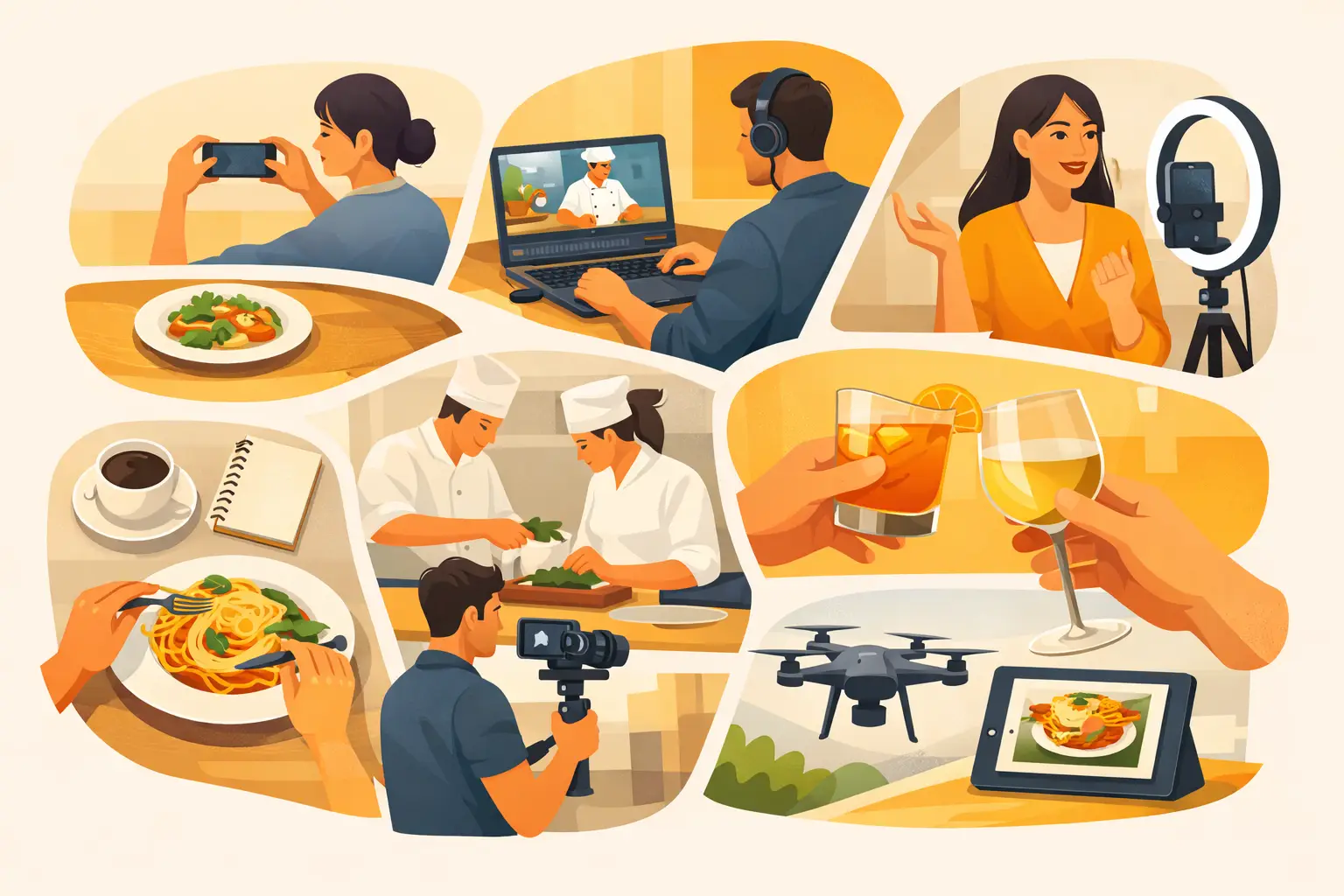
The usual restaurant shoot starts with a simple ask - get fresh menu photos. Then the real cost shows up. You need a photographer, food styling, prep time, lighting, a cleaned-up location, staff coordination, and enough margin for retakes when the food dies under the lights. For teams trying to produce weekly content, restaurant photo shoot alternatives are not a creative experiment. They are an operating decision.
If your business needs more images than your budget or schedule can support, the better question is not whether to replace traditional photography entirely. It is which production model gives you the right mix of speed, control, realism, and repeatable output.
Why restaurant photo shoot alternatives are gaining ground
Traditional food photography still has value, especially for hero assets, packaging launches, and brand campaigns where every detail needs to be art-directed on set. But most restaurants and food businesses are not struggling with a lack of one perfect image. They are struggling with volume.
Menus change. Seasonal promos rotate. Paid social needs new creative. Third-party delivery platforms need clean thumbnails. Organic channels reward frequency. A single shoot can cover some of that, but it rarely covers all of it for long.
That gap is where restaurant photo shoot alternatives make practical sense. They reduce production friction, shorten turnaround time, and make it easier to create assets for specific placements instead of forcing every channel to reuse the same few images.
1. AI-generated food visuals for scalable output
For teams that need content at volume, AI-generated food imagery is the most direct alternative to repeated restaurant shoots. The core advantage is not novelty. It is production efficiency.
Instead of coordinating a physical set, you can generate food visuals based on a specific dish, composition style, camera angle, background, lighting setup, or campaign format. That matters when your team needs ten variations for ads, vertical content for stories, square posts for social, and clean menu-ready images without rebuilding the whole shoot each time.
The trade-off is control versus documentation. AI visuals are excellent for promotional content, concepting, seasonal campaigns, and brand-consistent menu imagery when the goal is appetizing output, not literal documentary accuracy of a plated item on a given day. If you need exact SKU-level representation for regulated packaging or highly specific product claims, you may still want traditional photography in the mix.
For many food businesses, though, AI covers the highest-volume part of the visual workload. That is why specialized platforms matter more than general image tools. A food-focused system is better tuned for plating logic, texture, ingredient realism, and composition decisions that actually look usable in marketing.
2. In-house smartphone production with a repeatable setup
Not every alternative needs new software or outside vendors. A disciplined in-house setup can outperform a rushed professional shoot if the team uses a simple production system.
This works best when you standardize the environment. Use one table surface, one lighting direction, one set of props, and one framing guide for each content type. Once that system is stable, staff can capture menu updates, specials, and social content with much less friction.
The limitation is consistency over time. Different employees shoot differently. Lighting changes. Food plating shifts. Editing gets uneven fast. For businesses with one location and a hands-on owner or marketer, this can be enough. For multi-location brands or agencies managing multiple accounts, the variance becomes a problem.
A smartphone workflow is most useful as a low-cost capture layer, not always as the full answer. It can support behind-the-scenes content, real-time updates, and casual social posts better than premium campaign work.
3. Stock food photography for generic placements
Stock imagery is one of the oldest restaurant photo shoot alternatives, and it still has a place when specificity is not required. If you need a broad image of coffee, salad, pizza, or cocktails for a temporary landing page, blog header, or moodboard, stock can be fast.
The issue is sameness. Stock rarely matches your exact menu item, portioning, packaging, or brand aesthetic. It may solve a short-term gap, but it usually weakens differentiation. Customers notice when a listed dish looks too polished, too generic, or disconnected from what they actually receive.
Use stock when the image is supporting content, not carrying the sale. If the asset is central to the customer decision, generic visuals can cost more in trust than they save in production.
4. User-generated content with selective editing
For restaurants with active customers, user-generated content can become a useful visual source. Diners already document food, interiors, and group experiences. Some of those assets are more persuasive than brand-shot content because they feel immediate and credible.
But user-generated content is not a full replacement for structured production. Quality varies. Permissions need to be managed. Framing is inconsistent. The best use case is selective reuse for social proof, community marketing, and story-driven social channels.
If your brand is trying to look polished across paid media, menus, and owned web properties, UGC should complement a more controlled system. It is strong on authenticity and weak on standardization.
5. Template-based design with minimal photography
Another practical route is reducing the number of original images you need. Many restaurants overproduce photos when the real need is variation in layout, offers, formats, and messaging.
A template-based workflow lets you reuse a smaller image library across promos, menu highlights, flyers, digital signage, and social placements. This does not eliminate imagery, but it lowers content demand. One strong burger visual can support multiple ad concepts if the surrounding design system is doing enough work.
The trade-off is fatigue. If the same two or three food images appear everywhere, performance can flatten. This model works best when paired with a source of frequent new visuals, whether that is AI generation, occasional in-house capture, or periodic photography.
6. Short-form video built from stills and motion effects
Some teams assume they need a full video shoot to compete on social. Often they do not. If your goal is motion content for reels, stories, or ads, animated stills and lightweight motion treatments can bridge the gap.
This is especially useful for limited-time offers, menu announcements, and paid social testing. You can create movement through zoom, pan, text overlays, layered steam effects, or stylized transitions without filming a full production day.
The limitation is depth. Motion from stills can extend the usefulness of visual assets, but it will not fully replace live-action footage when your concept depends on hands, pours, slicing, or kitchen action. Still, for many restaurant operators, this approach covers a large share of short-form needs at a much lower cost.
7. Hybrid production instead of full replacement
The most effective answer is often hybrid, not absolute. Use traditional photography for a small set of hero assets. Use AI-generated visuals for campaign volume, menu expansion, and rapid testing. Use smartphone capture for day-to-day updates. Use UGC where authenticity matters more than polish.
This approach aligns production cost to asset value. Not every image deserves a studio budget. Not every marketing channel needs documentary precision. The goal is not to choose the most impressive production method. The goal is to choose the most efficient one for each use case.
How to choose the right alternative
The decision comes down to four filters: speed, volume, consistency, and accuracy.
If you need assets this week and need a lot of them, AI is hard to beat. If you need real-life documentation of a flagship dish exactly as served, traditional photography still earns its place. If you need daily content and have limited budget, an in-house capture system can carry more weight than people expect. If you just need filler visuals, stock may be enough, but only for low-stakes placements.
This is also where specialized tooling matters. A platform built for food production is more useful than a general creative tool when your team is repeatedly making menu images, promo assets, and campaign variations. The workflow is closer to the business problem. That is the difference between experimenting with visuals and actually operationalizing them.
For teams evaluating cost, the hidden comparison is not shoot day versus software subscription. It is recurring production overhead versus repeatable output. Every time you can skip scheduling, prep, location cleanup, and reshoots, the economics change. That is why platforms like Umami AI appeal to restaurants, agencies, and food brands that need commercial food visuals as an ongoing function, not a one-time project.
The strongest restaurant photo shoot alternatives are the ones that fit your production reality. If your content calendar moves faster than your shoot schedule, your next step is not better planning. It is a visual workflow built for scale.